How to Stop Rats Eating Chicken Feed: A Practical UK Guide
This guide contains affiliate links. If you buy through them we may earn a small commission, at no extra cost to you. Find out more.
Where there’s chicken feed, there are often rats. They’re drawn in by spilled pellets and scattered corn, they can spread disease to hens and people, and they’ll take eggs and even young chicks. Brown rats are common across the UK, in towns as well as the countryside, so almost every keeper has to think about them at some point. The good news is that a few simple changes make your garden far less inviting — and prevention is much easier than getting rid of an established colony.
Why rats are a problem for hen keepers
- They eat a lot of feed. A family of rats can get through a surprising amount of layers’ pellets, adding noticeably to your feed bill.
- They spread disease. Rats can carry bacteria such as Salmonella and Leptospira, contaminating feed and water.
- They damage equipment. They chew through plastic feeders, feed sacks and wooden coops.
- They take eggs and chicks. And a cornered rat can injure a hen.
- Neighbours notice. Rats around a chicken run can quickly become a source of complaints.
Signs you have rats
- Burrows around the coop or run, often under slabs, sheds or the coop itself
- Droppings — dark, about the size of a grain of rice
- Feed disappearing faster than usual
- Gnawed wood, plastic or feed bags
- Runs worn through grass along fences and walls
- Greasy smear marks along regular routes
- Scratching or squeaking from under the coop at night
How to stop rats eating chicken feed
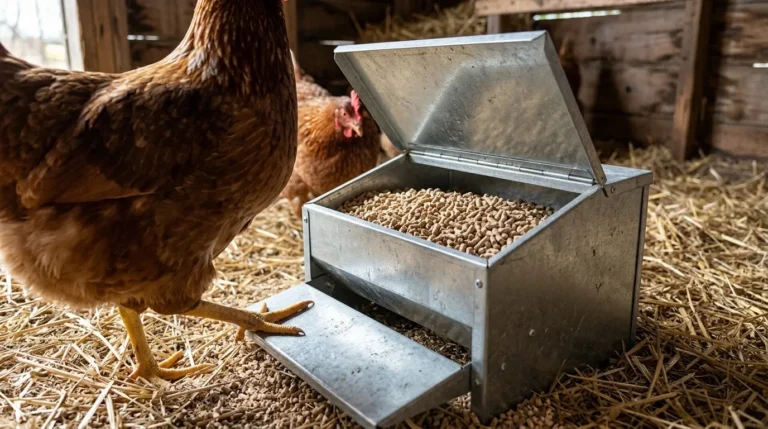
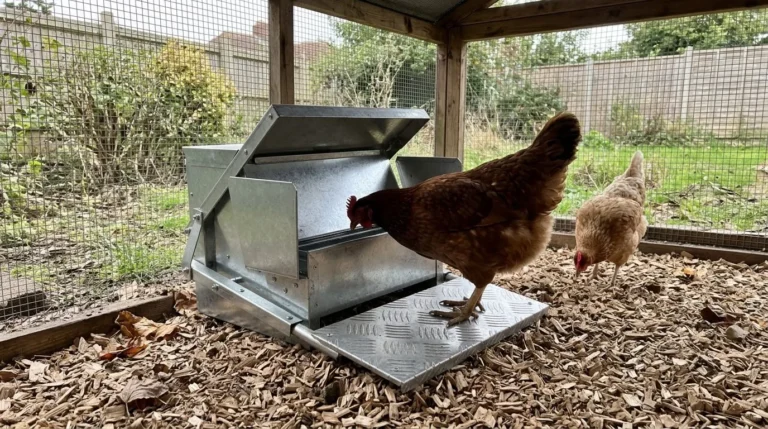
- Use a rat-proof feeder. A treadle feeder only opens when a hen stands on the step, so rats can’t get to the food. It’s the single most effective change most keepers can make. See the best treadle feeders.
- Bring feeders in at night if they aren’t rat-proof. Hens don’t eat in the dark, so there’s no need to leave food out.
- Clean up spilled feed every day, and don’t throw scratch on the ground late in the afternoon. Feed only as much corn as your hens will clear in a few minutes.
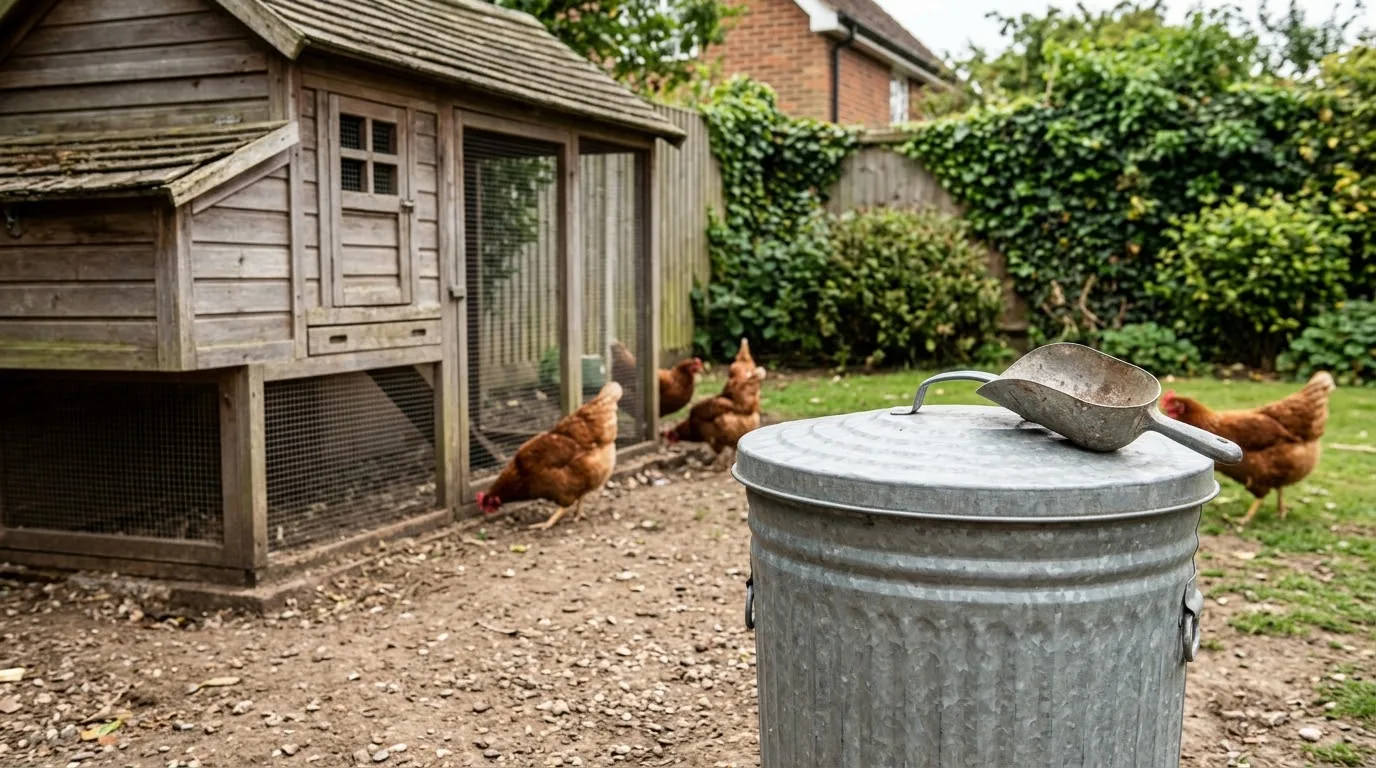
- Store feed in metal bins with tight-fitting lids. Rats chew through plastic and paper sacks with ease.
- Raise the coop at least 20–30cm off the ground, so rats can’t live underneath — or block the gap completely with welded mesh.
- Use 13mm welded mesh on the run, and a mesh floor or skirt to stop rats burrowing in. Chicken wire keeps chickens in but won’t keep rats out.
- Collect eggs daily, and don’t leave water and food where rats can reach them overnight.
- Clear clutter. Log piles, old pallets, compost heaps right next to the run and long grass all give rats cover.
- Never feed kitchen scraps. It’s illegal in the UK to feed kitchen scraps or catering waste to poultry, and leftovers attract rats quickly. See what chickens can eat.
Choosing a rat-proof feeder
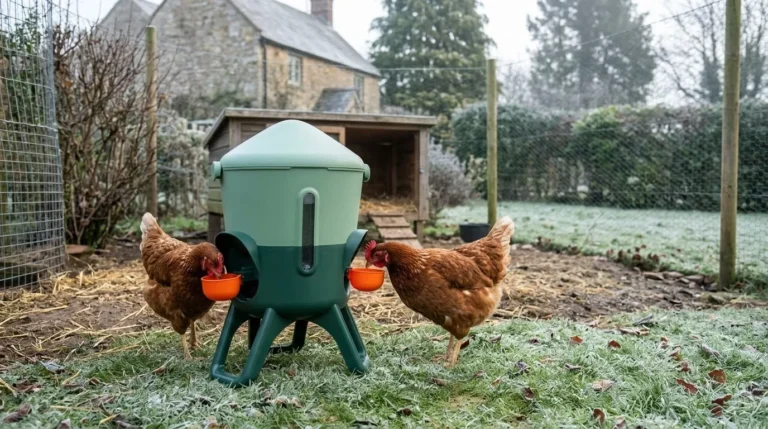
A good treadle feeder needs a step that’s heavy enough that a rat can’t open it but light enough for your smallest hen. Galvanised steel lasts longer than plastic and can’t be gnawed. Most hens learn to use a treadle within a few days, especially if you wedge the lid open at first. Covered feeders that keep rain off are useful too, as wet feed goes mouldy. Our best chicken feeders guide compares the options.
Water matters too
Rats need water as well as food. If your drinker is in the run overnight, it can keep rats coming back. Where practical, use a drinker inside the coop or a covered design, and avoid open dishes. See our best chicken drinkers.
What about poison and traps?
If rats are already established, you may need to control them as well as removing their food. Rodenticides can be dangerous to hens, pets and wildlife — including birds of prey and owls that eat poisoned rodents — so they must only be used strictly according to the label and placed in tamper-resistant bait stations where hens and other animals can’t reach them. Many keepers prefer to call in a professional pest controller, especially for a large infestation.
Snap traps are effective, but they should always be set inside a tunnel or lockable box that hens, pets and wild birds can’t get into. Check them daily. Live traps aren’t a good solution, as releasing rats elsewhere just moves the problem.
Natural deterrents: do they work?
You’ll see plenty of advice about peppermint oil, ultrasonic devices and other deterrents. There’s little reliable evidence that they keep a determined rat away from an easy food source. Removing access to food, water and shelter is far more effective.
Frequently asked questions
Do chickens attract rats?
Chickens themselves don’t, but their food and water do. Remove easy access to feed and most rats will move on.
Will my hens kill rats?
Hens will sometimes kill mice, but rats are a different matter — a rat can injure a hen. Don’t rely on your flock to deal with them.
Can rats get into a chicken coop?
Yes, through surprisingly small gaps and by gnawing. Check for holes, use welded mesh rather than chicken wire, and make sure doors close properly.
Should I tell my neighbours if I have rats?
It’s good practice. Rats move between gardens, and tackling them together is far more effective.
Prices, ratings and specifications were checked on Amazon UK in October 2026 and may have changed since. As an Amazon Associate we earn from qualifying purchases.