
Blog

  • Best Chicken Bedding UK (2026): Straw vs Hemp vs Shavings

    Best Chicken Bedding UK (2026): Straw vs Hemp vs Shavings

    This guide contains affiliate links. If you buy through them we may earn a small commission, at no extra cost to you. Find out more.

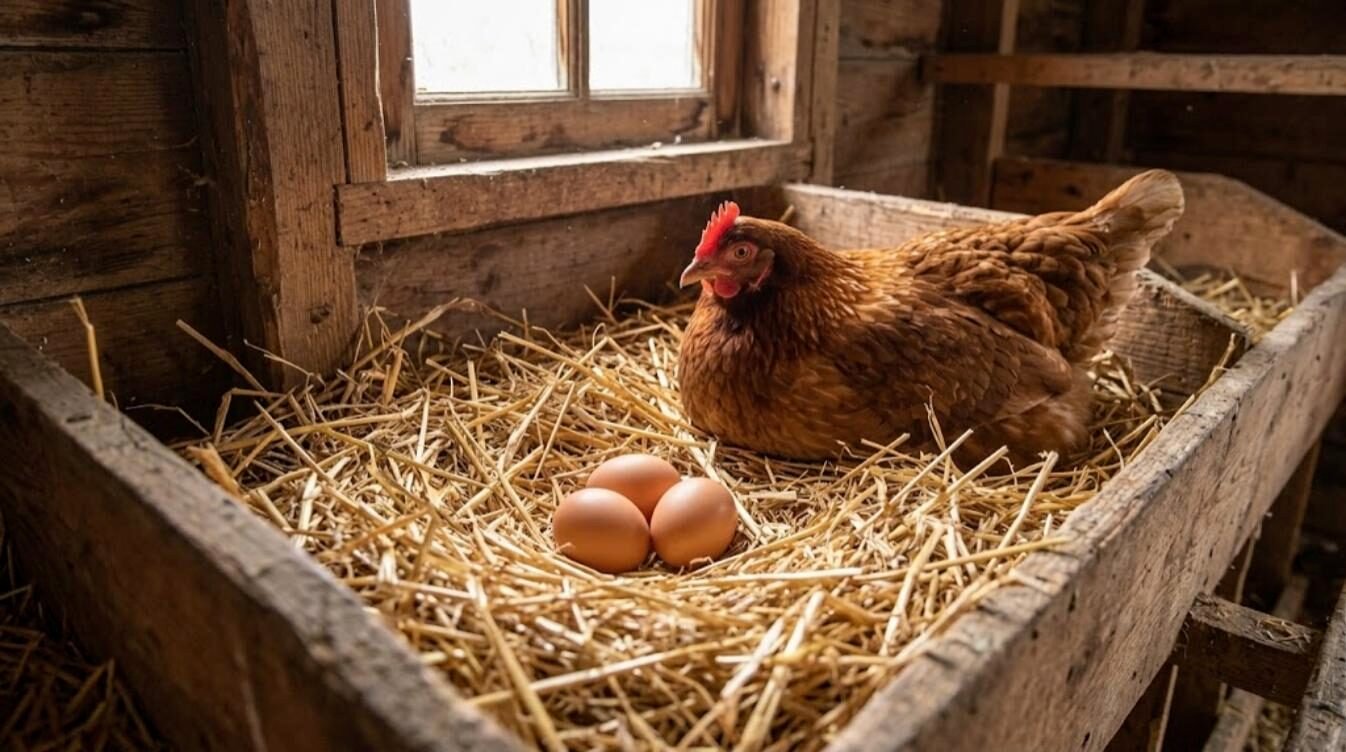
    Bedding is one of those things new keepers rarely think about until they’re standing in the pet shop staring at five different bags. Yet the right bedding makes a real difference: it keeps the coop dry, cuts down on smells, protects your hens’ feet and makes cleaning out far quicker. The wrong one can be dusty, damp or even harmful.

    Here we compare the three main options UK keepers use — chopped straw, hemp and wood shavings — and pick out the best bags of each on Amazon UK.

    Straw vs hemp vs shavings: the quick answer

    BeddingGood forDrawbacks
    Chopped strawWarm and cosy, cheap, great for nest boxes, composts quicklyLess absorbent than hemp; must be dust-extracted
    HempVery absorbent, low dust, controls smells well, lasts longer between clean-outsCosts more per bag
    Wood shavings / fibreAbsorbent, easy to find, light to handleCan be dusty if poor quality; slower to compost

    If you want one simple recommendation: hemp for the coop floor, chopped straw for the nest boxes. That combination keeps the house dry and gives your hens a soft, inviting spot to lay.

    Our top picks at a glance

    BeddingTypeBest forPrice (approx.)
    Dengie Fresh Bed for ChickensChopped strawBest overall£26
    AubiChick Hemp Bedding (20kg)HempBest hemp bedding£26
    Chicksoft Chopped Wheat Straw (16kg)Chopped strawBest British-grown straw£18
    Easichick Poultry Bedding (10kg)Wood fibreBest budget bedding£12
    Warma Hardwood Chicken Chips (70L)Wood chipsBest for the run floor£19

    The best chicken bedding in the UK

    1. Dengie Fresh Bed for Chickens — best overall

    Dengie is a well-known British animal bedding and feed company, and this chopped straw bed was developed with the British Hen Welfare Trust. It’s one of the most popular chicken beddings on Amazon UK, with hundreds of reviews.

    • Chopped, dust-extracted straw
    • Includes pine oil, a natural antibacterial and antifungal
    • 100-litre bale — Dengie says it will last five hens about four weeks
    • Compostable, and breaks down faster than shavings or pellets

    What we like: It gives you the warmth and comfort of straw without the dust and long stalks of a standard bale, and it’s a good choice for ex-commercial hens.

    Worth knowing: Like all straw, it holds less moisture than hemp, so spot-clean wet patches regularly, especially in winter.

    2. AubiChick Hemp Bedding — best hemp bedding

    Hemp is the bedding many experienced keepers swear by, and Aubiose is one of the best-known hemp brands. AubiChick is its version made for poultry.

    • 20kg bag
    • 100% natural and pesticide-free
    • Absorbs moisture and helps control smells
    • Fully compostable

    What we like: Hemp soaks up droppings and moisture far better than straw, so the coop stays drier and fresher for longer. That means fewer full clean-outs — useful in a wet British winter.

    Worth knowing: It costs more per bag than straw, although it lasts longer. It’s less cosy than straw in nest boxes, so many keepers use both.

    3. Chicksoft Chopped Wheat Straw — best British-grown straw

    A soft, short-chopped wheat straw that’s grown in Essex and packed in the UK.

    • 16kg bag of chopped wheat straw
    • Dust-extracted
    • Treated with a blend of oils including eucalyptus for a fresh smell
    • Grown and packed in Britain

    What we like: It’s well priced, very well reviewed and soft enough to make lovely nest box bedding.

    Worth knowing: Some hens (and keepers) aren’t keen on scented bedding. If you’d prefer unscented straw, check before you buy.

    4. Easichick Poultry Bedding — best budget bedding

    A low-cost bedding made from natural wood fibres, formulated specifically for domestic poultry.

    • 10kg bag
    • Made from natural wood fibres
    • Dust-free and antibacterial
    • Highly absorbent

    What we like: It’s cheap, absorbent and easy to handle, which makes it a sensible everyday choice for a small flock.

    Worth knowing: Wood-based bedding takes longer to break down on the compost heap than straw or hemp.

    5. Warma Hardwood Chicken Chips — best for the run floor

    Bedding isn’t just for inside the coop. In a British winter, a run with bare soil turns into mud in no time. A thick layer of hardwood chips keeps it drier underfoot.

    • 70-litre bag
    • Kiln-dried virgin hardwood
    • Pieces roughly 4–39mm in size
    • Robust and slow to break down

    What we like: A good layer of chips makes a muddy run usable again, and hens love scratching through it.

    Worth knowing: This is for the run, not the coop or nest boxes. You’ll need several bags to cover a decent-sized run.

    What to avoid

    • Hay: it looks similar to straw but holds moisture and can go mouldy, which can cause breathing problems in hens.
    • Sawdust: it’s too fine and dusty, and it can stick to damp eggs and feet.
    • Newspaper on its own: it’s slippery when wet and doesn’t absorb well.
    • Dusty bedding: whatever you choose, look for “dust-extracted” on the bag. Hens have sensitive lungs.

    How much bedding do you need?

    Aim for a layer of around 5–10cm on the coop floor and enough in each nest box for your hens to make a little hollow. Spot-clean droppings every few days, and do a full clean-out every couple of weeks — more often in wet weather. With hemp you can usually go a bit longer between clean-outs.

    Frequently asked questions

    Is straw or hemp better for chickens?

    Hemp is more absorbent and less dusty, so it keeps the coop drier and cleaner. Straw is warmer, cheaper and nicer in nest boxes. Many keepers use both.

    Can I compost used chicken bedding?

    Yes. Straw, hemp and wood shavings mixed with chicken droppings make excellent compost. Let it rot down for several months before putting it on your vegetable beds.

    What’s the best bedding for winter?

    Chopped straw is warmer, but hemp handles the damp better. In very cold, wet weather a deep layer of hemp with straw in the nest boxes works well. Make sure the coop is still well ventilated — damp air causes more problems than cold.

    Prices, ratings and specifications were checked on Amazon UK in October 2026 and may have changed since. As an Amazon Associate we earn from qualifying purchases.
  • Best Chicken Feeders UK (2026): Rat-Proof and No-Waste Picks

    Best Chicken Feeders UK (2026): Rat-Proof and No-Waste Picks

    This guide contains affiliate links. If you buy through them we may earn a small commission, at no extra cost to you. Find out more.

    A good feeder does three jobs: it keeps your hens fed for days at a time, it stops them flicking food all over the run, and — crucially in a British garden — it keeps rats, mice and wild birds out of it. Get it wrong and you’ll be paying to feed half the neighbourhood’s wildlife, and a rat problem near the coop is the last thing you want.

    We’ve compared the most popular chicken feeders on Amazon UK, from simple gravity feeders to fully rat-proof treadle designs, so you can choose the right one for your flock and your budget.

    Our top picks at a glance

    FeederBest forCapacityPrice (approx.)
    Omlet No Waste Feeder 5kgBest overall5kg (6 hens for a week)£60
    Grandpa’s Feeders Treadle FeederBest rat-proof feeder9kg (6 hens for 10 days)£160
    Galvanised Wall-Mounted FeederBest budget large feeder11.5kg£37
    KCT Gravity Feeder 3kgBest cheap starter feeder3kg£9
    RentACoop Port Feeder & Drinker SetBest for small flocks and chicksAbout 1.1kg feed + 2L water£50

    The best chicken feeders in the UK

    1. Omlet No Waste Feeder (5kg) — best overall

    Omlet designed this feeder around the way hens actually eat, and it tackles the two biggest feeder annoyances: wasted food and bossy hens hogging it.

    • Holds 5kg — enough for up to six hens for a week, according to Omlet
    • Enclosed individual feeding ports, so only one hen can use each port at a time
    • Can hang from the handle or stand on its legs
    • Splits into three pieces for cleaning, with no tools needed
    • Also available in 2.5kg and 11kg sizes

    What we like: The enclosed ports mean far less food ends up on the floor, which saves money and gives rats less reason to visit. It’s also one of the best-rated feeders on Amazon UK.

    Worth knowing: It isn’t sealed against rats like a treadle feeder, so if you already have a rat problem, store it inside overnight or look at our next pick.

    2. Grandpa’s Feeders Treadle Feeder — best rat-proof feeder

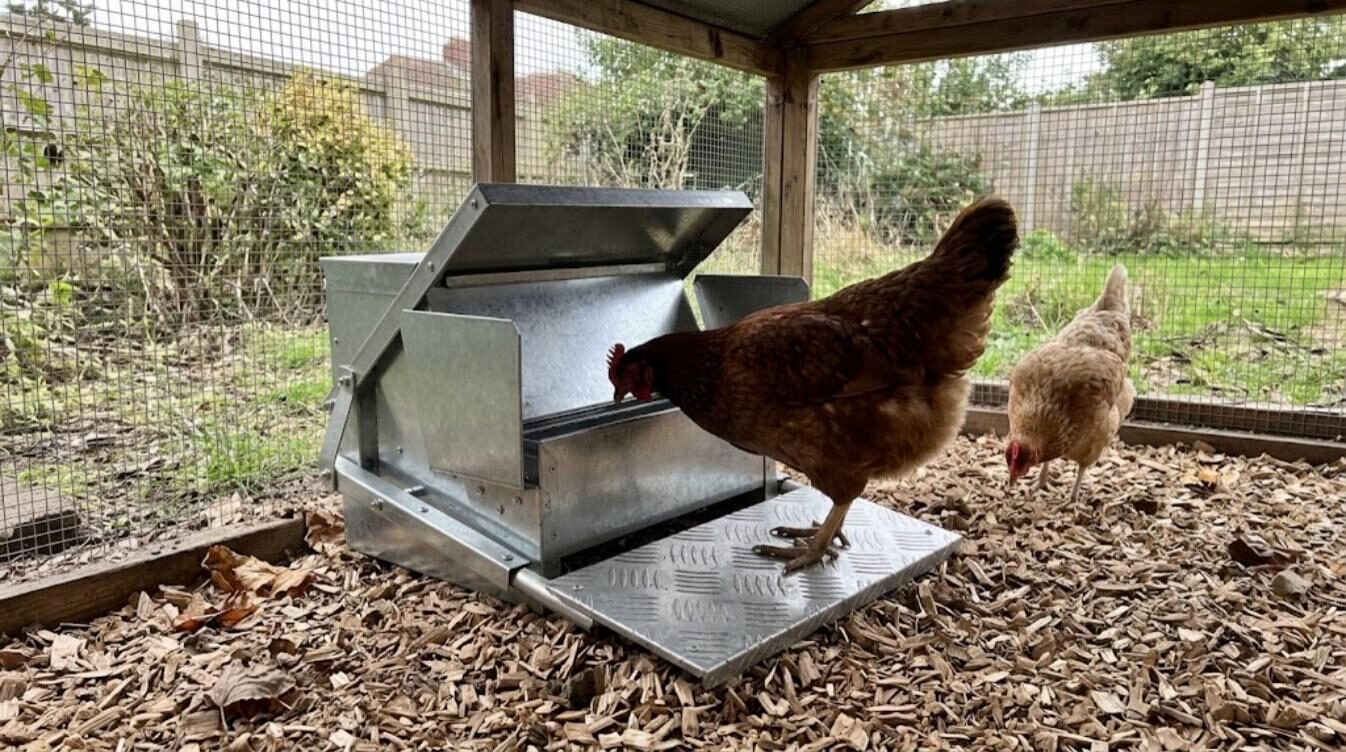
    A treadle feeder only opens when a hen steps on the plate in front of it. Rats and most wild birds are too light to open it, so the food stays sealed away. Grandpa’s Feeders is one of the best-known designs and has over a thousand reviews.

    • Holds up to 9kg — enough for six hens for up to 10 days
    • Full lid protects feed from rats, wild birds, insects and rain
    • Anti-flick grill stops hens scattering food
    • Side guards keep hens feeding from the front

    What we like: If rats are a problem in your area, a treadle feeder is the most effective fix there is. The large capacity also makes it ideal if you’re away for a long weekend.

    Worth knowing: It’s expensive, and hens need a few days to learn to use the treadle. Wedge the lid open at first so they can see the food, then lower it gradually.

    3. Galvanised Wall-Mounted Feeder (11.5kg) — best budget large feeder

    A large galvanised steel feeder with a rain cover, which you can fix to the wall of the coop or run to keep it off the ground.

    • 11.5kg capacity
    • Galvanised steel construction
    • Rain cover over the feeding trough
    • Wall-mounted design

    What we like: Mounting the feeder off the ground keeps feed clean and dry, and the rain cover is a real advantage in a British winter. It’s a lot of capacity for the price.

    Worth knowing: It has far fewer reviews than our other picks, and it isn’t rat-proof. Mount it at the height of your hens’ backs to reduce spillage.

    4. KCT 3kg Gravity Feeder — best cheap starter feeder

    The classic plastic gravity feeder: fill the tube and the feed drops into the tray as your hens eat. Simple, light and very cheap.

    • 3kg capacity (1kg and 10kg sizes also available)
    • 360-degree access, so several hens can eat at once
    • Carry handle for hanging or moving

    What we like: It does the job for a few pounds, and it’s a handy spare for broody hens or new birds in quarantine.

    Worth knowing: Open trays invite rats and wild birds, and hens will flick feed out. Hang it so the tray is roughly at back height, and bring it in at night.

    5. RentACoop Port Feeder and Drinker Set — best for small flocks and chicks

    A compact set with a port feeder and a nipple drinker that you can mount inside or outside the coop. It works from chicks right through to adult hens.

    • 2.5lb (about 1.1kg) feeder with a feeding port and slide cover
    • 64oz (about 2 litre) drinker with horizontal nipples
    • Anti-roost lid to stop hens perching on top
    • BPA-free plastic

    What we like: It’s a tidy solution for two or three hens or a brooder of chicks, and the enclosed design keeps feed and water clean.

    Worth knowing: The small capacity means topping up every few days, so it’s not the best choice for larger flocks.

    How to choose a chicken feeder

    How big should it be?

    A laying hen eats roughly 120–150g of layers’ pellets a day. So four hens will get through around 4kg a week. Choose a feeder that holds at least a few days’ worth, so you’re not refilling it every morning — but not so much that the feed goes stale or damp.

    Keeping rats away

    • Use a treadle feeder or bring the feeder inside at night.
    • Mop up spilled feed and don’t scatter treats late in the day.
    • Store sacks of feed in a metal bin with a tight lid.
    • Raise feeders off the ground or mount them on a wall.

    Pellets or mash?

    Most UK keepers feed layers’ pellets, which are less messy than mash and work in all of the feeders above. Check that your feeder’s ports or tray suit the feed you use.

    Keeping feed dry

    Wet feed goes mouldy quickly, which can make hens ill. In the UK it’s worth keeping feeders under cover — inside the run, under the coop or beneath a rain hood.

    Frequently asked questions

    Do treadle feeders really stop rats?

    They’re very effective because rats are usually too light to open the lid. A very large rat can occasionally manage it, so keep the area around the feeder clean too.

    Should I take my chicken feeder in at night?

    If it isn’t rat-proof, yes. Hens don’t eat in the dark, so there’s no harm in removing it once they’ve gone to roost.

    Where should I put the feeder?

    Somewhere sheltered and dry — inside the run is ideal. Avoid putting it directly under perches, where it will get dirty.

    Prices, ratings and specifications were checked on Amazon UK in October 2026 and may have changed since. As an Amazon Associate we earn from qualifying purchases.
  • Best Automatic Chicken Coop Doors UK (2026): Keep the Fox Out While You Sleep

    Best Automatic Chicken Coop Doors UK (2026): Keep the Fox Out While You Sleep

    This guide contains affiliate links. If you buy through them we may earn a small commission, at no extra cost to you. Find out more.

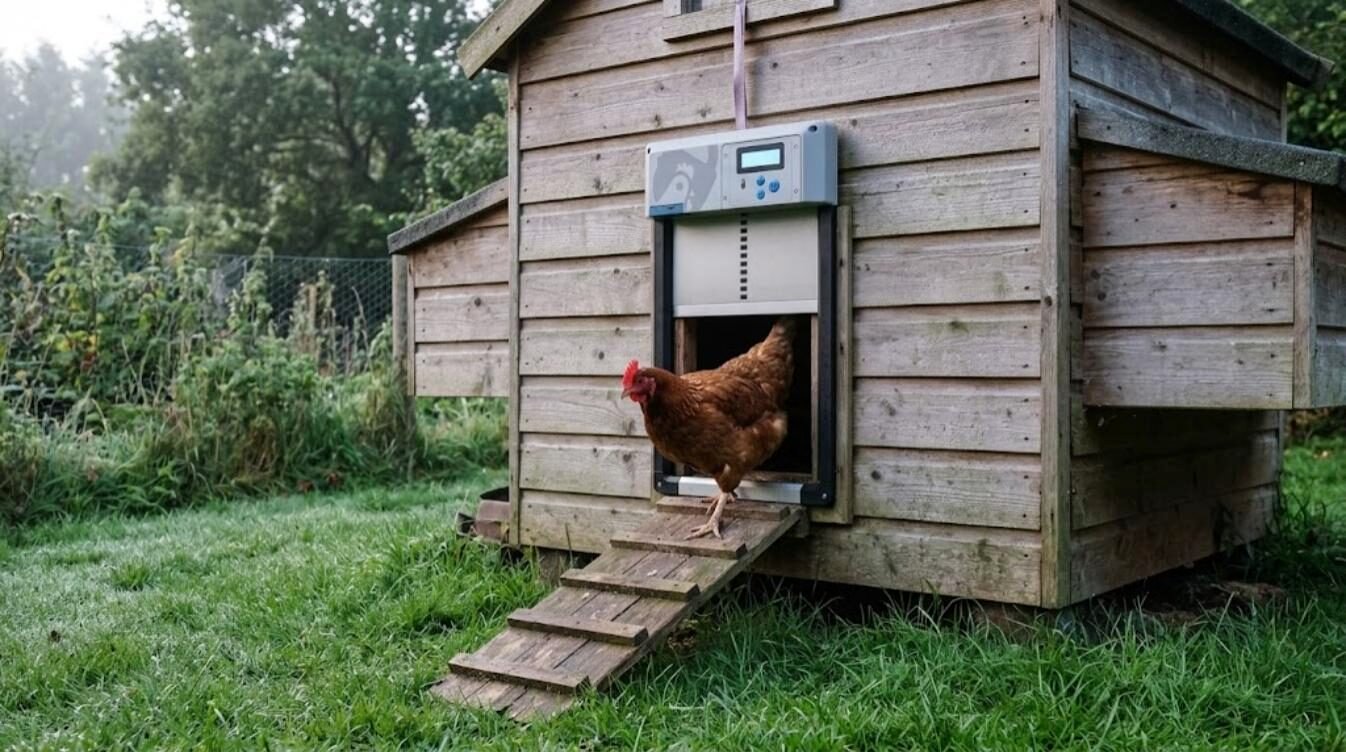
    Ask any experienced UK hen keeper what they wish they’d bought sooner and many will say the same thing: an automatic coop door. Foxes are most active at dusk and dawn, which is exactly when you’re stuck at work, sitting down to dinner or enjoying a rare lie-in. An automatic door shuts your hens in safely every evening and lets them out in the morning, whether you’re at home or not.

    We’ve compared the most popular automatic doors on Amazon UK — from trusted British brands to budget solar models — looking at how they’re powered, how they decide when to open and close, and how well they keep predators out. Prices are what we found at the time of writing.

    Our top picks at a glance

    DoorBest forPowerPrice (approx.)
    ChickenGuard AIO CompleteBest overallAA batteries (solar or mains optional)£150
    ChickenGuard PRO + Self-Locking DoorBest for fox securityBatteries, solar or DC£170
    Omlet Automatic Door OpenerBest for Omlet Eglu owners4 x AA batteries£179
    OKKÖBI Solar Coop DoorBest budget solar doorSolar with built-in battery£50
    INNOLAND Large Automatic DoorBest for large breedsBatteries£59
    MASTERFUN Large Battery DoorBest simple timer door3 x AA batteries£50

    The best automatic chicken coop doors in the UK

    1. ChickenGuard AIO Complete — best overall

    ChickenGuard is one of the best-known names in automatic coop doors in the UK, and the AIO Complete bundles the opener and door together, so there’s nothing extra to buy.

    • Complete door and opener in one unit, with four AA batteries included
    • Auto-Stop: if something blocks the door, it reopens and tries again
    • Anti-lift, powder-coated aluminium door
    • Winter Mode gives the motor extra power on frosty mornings
    • Can be switched to solar or mains power later
    • Guided LCD set-up with automatic calibration

    What we like: It’s designed with exactly the problems British keepers face in mind: an anti-lift door so a fox can’t prise it up, and a Winter Mode for icy mornings. Having the door and motor sold together also takes the guesswork out of fitting.

    Worth knowing: It costs around three times as much as budget doors. You’re paying for the brand, the security features and the after-sales support.

    2. ChickenGuard PRO with Self-Locking Door — best for fox security

    If foxes regularly visit your garden, this is the set-up we’d look at first. It pairs ChickenGuard’s more powerful PRO motor with its self-locking door.

    • Self-locking “wings” engage when the door closes, so it can’t be pushed up from outside
    • PRO motor lifts doors weighing up to 2kg — handy in winter
    • Choose solar, AA batteries or DC mains power
    • Four operating modes, including timer and light sensor

    What we like: The self-locking door is the key feature here. A determined fox will try to lever a sliding door upwards, and a door that locks itself shut removes that weak spot.

    Worth knowing: It’s one of the more expensive options. Check which power option you’re selecting on the listing before you buy.

    3. Omlet Automatic Door Opener — best for Omlet Eglu owners

    Omlet’s door is the natural choice if you have (or are buying) an Eglu Cube or Eglu Pro, as it fits those coops directly. It also works with wooden coops.

    • Light sensor and timer modes — it can open at dawn and close at dusk
    • Runs on 4 x AA batteries, with around six months’ battery life (batteries not included)
    • Waterproof casing rated IPX6
    • Reversible, so the door can open to the left or right

    What we like: It has one of the highest owner ratings among the premium doors, and it’s neat and simple to live with. Following dawn and dusk means you don’t have to keep adjusting a timer as the seasons change.

    Worth knowing: Batteries aren’t included. On the Eglu it’s a straightforward fit; on a wooden coop, measure your pop-hole first to make sure it suits your set-up.

    4. OKKÖBI Solar Coop Door — best budget solar door

    For around £50, this solar-powered door offers features you’d once only find on much pricier models, and it has hundreds of reviews on Amazon UK.

    • Solar panel charges a built-in 2,000mAh battery
    • Light sensor or scheduled timer
    • Anti-pinch protection
    • Aluminium alloy and ABS plastic construction
    • 9.6in x 8.2in opening (roughly 24cm x 21cm)
    • LCD screen and a remote control

    What we like: There are no batteries to replace, and the remote control is handy if you want to let the hens out early without walking down the garden in your slippers.

    Worth knowing: In a British December the days are short and often grey, so mount the panel where it gets as much light as possible. The opening is fine for most hens but can be snug for very large breeds.

    5. INNOLAND Large Automatic Door — best for large breeds

    If you keep big birds such as Orpingtons, Brahmas or ducks, a standard-sized door can be a squeeze. INNOLAND’s large door gives them more room.

    • Extra-large opening of 11in x 9.5in (about 28cm x 24cm)
    • Corrosion-resistant aluminium alloy
    • Timer and manual modes
    • Obstacle sensor stops the door if something is in the way
    • Battery powered, with up to six months’ running time claimed

    What we like: The bigger opening is genuinely useful for large breeds, and it’s well rated for the price.

    Worth knowing: It works on a timer rather than a light sensor, so you’ll need to adjust the times as the evenings draw in or get lighter — roughly once a month is enough.

    6. MASTERFUN Large Battery Door — best simple timer door

    A straightforward, well-reviewed timer door with a larger frame, at a budget price.

    • Frame measures about 28cm high x 24cm wide
    • Timer function to open and close at set times
    • Anti-pinch protection
    • Runs on 3 x AA batteries (not included)
    • Aluminium alloy construction with an LCD screen

    What we like: It’s simple to set up and operate, and it has close to a thousand reviews on Amazon UK.

    Worth knowing: Like the INNOLAND, it’s timer-based, so remember the clocks change twice a year in the UK — and so does the time your hens go to bed.

    How to choose an automatic coop door

    Light sensor or timer?

    Light sensors open the door at dawn and close it at dusk, so they follow the seasons for you. Timers open and close at the times you set, which gives you more control — for example, keeping your hens in until 8am so they don’t wake the neighbours in midsummer. Many doors offer both. If you use a light sensor, make sure it’s set so the door closes after your hens have gone in to roost, not before.

    Battery, solar or mains?

    • Batteries are the simplest option and usually last several months. Cold weather drains them faster, so swap them in autumn.
    • Solar means no batteries to buy, but British winters are short and dull. Choose a model with a built-in battery and put the panel in the sunniest spot you can.
    • Mains power is the most reliable, but you’ll need a safe outdoor power supply near the coop.

    Security features that matter

    Foxes are clever and persistent. Look for a door that can’t be lifted from outside (self-locking or anti-lift designs), a sturdy metal door rather than thin plastic, and an obstacle sensor so the door won’t trap a hen that’s late going to bed.

    Will it fit my coop?

    Measure your coop’s pop-hole and the space above it before you buy. Sliding doors need clearance above the opening to slide up into. Large breeds need a bigger opening — roughly 25cm x 30cm or more.

    Frequently asked questions

    Do automatic chicken doors work in winter?

    Yes, but cold weather can slow motors and drain batteries. Choose a door with a strong motor or a winter setting, keep ice and bedding clear of the runners, and change the batteries before winter sets in.

    Will my hens learn to use an automatic door?

    Very quickly. Hens naturally head inside to roost as it gets dark. For the first few evenings, check that everyone is in before the door closes.

    Is an automatic door enough to stop a fox?

    It’s a big help, because it means the coop is never left open at dusk. But it’s only one part of keeping your hens safe — the coop and run themselves need to be secure too. See our guide to the best chicken coops for tips on fox-proofing.

    Do I still need to check on my hens?

    Yes. An automatic door saves you a trip down the garden at dusk, but you should still check on your hens every day for food, water and signs of illness.

    Prices, ratings and specifications were checked on Amazon UK in October 2026 and may have changed since. As an Amazon Associate we earn from qualifying purchases.

  • Best Chicken Coops UK (2026): Our Top Picks for Every Garden

    Best Chicken Coops UK (2026): Our Top Picks for Every Garden

    This guide contains affiliate links. If you buy through them we may earn a small commission, at no extra cost to you. Find out more.

    Choosing a chicken coop is the biggest decision you’ll make when you start keeping hens — and in the UK it comes with a few extra challenges. Our coops have to cope with months of rain, the odd hard frost, a determined urban fox and, if you’re unlucky, a red mite infestation every summer.

    We’ve compared the coops that UK keepers actually buy, checking the specs, the materials and hundreds of owner reviews, so you can pick one that suits your garden, your budget and the number of hens you want. Prices are what we found on Amazon UK at the time of writing and do change, so it’s always worth checking.

    Our top picks at a glance

    CoopBest forHens*Price (approx.)
    FeelGoodUK Large Coop HouseBest value wooden coopFree-range flocks£180
    Omlet Eglu Cube LargeBest premium plastic coopUp to 6 large hens£770
    Cocoon 3000WX 8ftBest coop with built-in run3–4 hens£220
    Aivituvin Mobile Coop (XL)Best for moving around the gardenSmall flock£220
    FeelGoodUK WindsorBest budget plastic-panel coopSmall flock£145
    VOUNOT Small Coop and RunBest for just two hens2 small hens£96

    *Capacity as stated by the manufacturer where given. In practice these figures are generous — see “How many hens will it really hold?” below.

    The best chicken coops in the UK

    1. FeelGoodUK Large Coop House — best value wooden coop

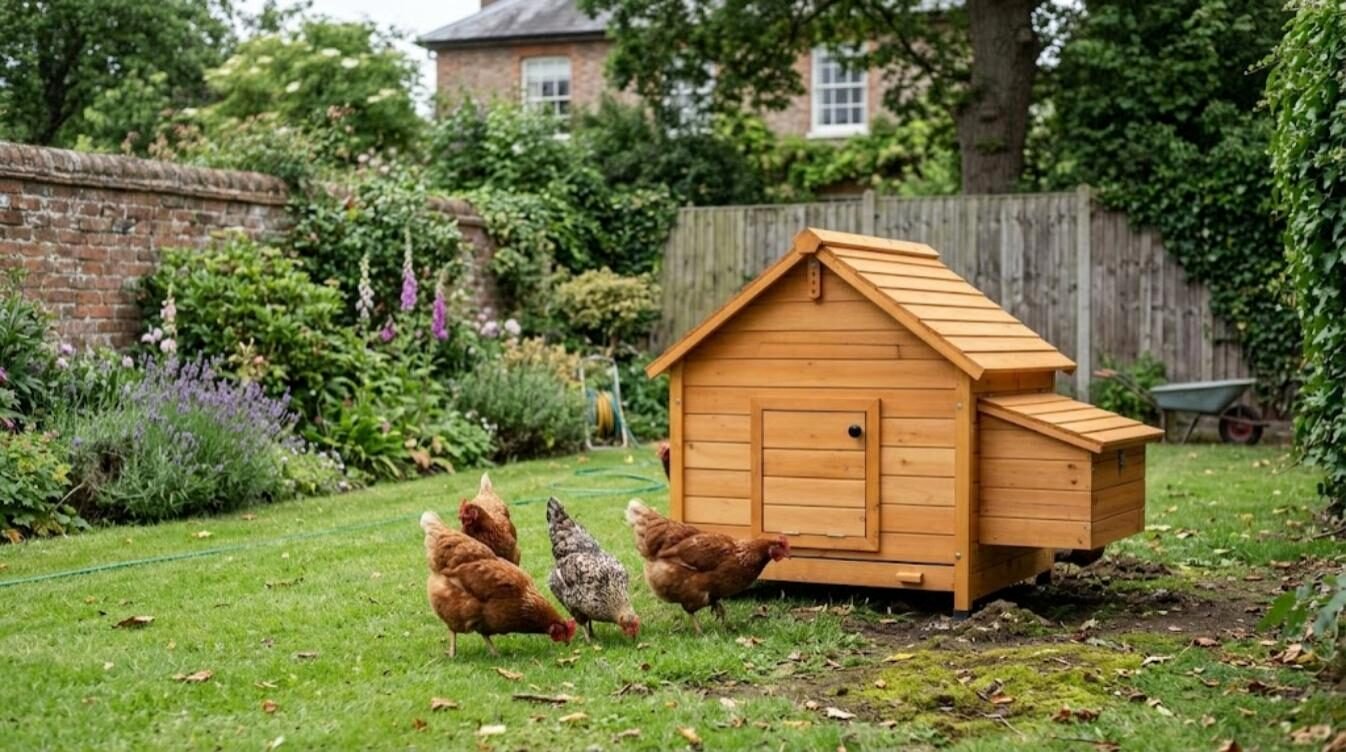
    If you plan to let your hens free-range for most of the day and simply need a solid, well-thought-out house to lock them in at night, this is the coop we’d start with. It’s a proper British-designed hen house rather than a flat-pack “ark”, and it has a big following among UK keepers.

    • Overall size: roughly 115cm wide x 85cm deep x 90cm high
    • Tongue-and-groove wooden panels and roof
    • Twin-section external nest box (an extra box can be added)
    • Four roosting perches and adjustable ventilation
    • Drop-down doors and ramps at the front and back

    What we like: The roof is solid tongue-and-groove timber rather than roofing felt. That matters more than it sounds: felt is a favourite hiding place for red mite, so leaving it out makes the coop easier to keep clean. Four perches and a twin nest box give a small flock plenty of room at night.

    Worth knowing: It’s a house only, with no attached run, so it suits hens that free-range during the day or go inside a separate walk-in run. As with any wooden coop, give it a coat of animal-safe wood treatment before your hens move in.

    2. Omlet Eglu Cube Large — best premium plastic coop

    The Eglu Cube is the coop you’ll see in a lot of British gardens, and for good reason. It’s expensive, but it’s built to last and it’s about as low-maintenance as a coop gets.

    • Suitable for up to 6 large hens, 8 medium breeds or 10 bantams (manufacturer’s figures)
    • Twin-wall insulated plastic panels
    • Slide-out trays and wipe-clean surfaces
    • Comes in three boxes with how-to-build videos
    • Note: the listing we checked is the coop only — the run is sold separately

    What we like: Cleaning is genuinely quick: the trays slide out and the whole thing can be hosed down. Plastic gives red mite far fewer places to hide than wood, and the insulated panels help on cold winter nights and hot summer days.

    Worth knowing: This is a big investment, and once you add a run the total climbs further. Double-check exactly what’s included before you buy, as Omlet sells the Cube in several bundles.

    3. Cocoon 3000WX 8ft — best coop with a built-in run

    If you want everything in one unit — house, nest box and run — the Cocoon 3000WX is a popular choice that doesn’t break the bank.

    • Approx. 250cm long x 76cm wide x 103cm high, including nest box and roof
    • Suitable for 3–4 birds, depending on breed and size
    • Metal-lined pull-out tray for cleaning
    • Opening roof panels for easy access
    • Not a walk-in coop

    What we like: The pull-out tray and lift-up roof panels make the weekly clean-out much less of a chore, and the integrated run gives your hens somewhere safe to scratch about when you’re not around.

    Worth knowing: At 76cm wide, the run is fairly narrow, so we’d stick to three hens rather than four if they’ll spend long periods shut in. Because you can’t walk into it, reaching the far end of the run takes a bit of stretching.

    4. Aivituvin Mobile Coop (XL) — best for moving around the garden

    Hens are very good at turning a patch of lawn into bare mud. A coop on wheels lets you move them onto fresh grass every few days, which is kinder to both your hens and your garden.

    • Approx. 190cm long x 66cm wide x 100cm high
    • Two wheels and a long handle for moving
    • Two-section nest box with slide-out metal tray
    • Run underneath the house
    • Asphalt-style sloping roof

    What we like: It’s one of the better-reviewed mobile coops on Amazon UK, and the slide-out tray and spring latches are useful touches at this price.

    Worth knowing: Like most coops in this price bracket it’s made from softwood, so it will need regular treatment to cope with British weather. Wheeled coops also need fairly level ground to move easily.

    5. FeelGoodUK Windsor — best budget plastic-panel coop

    The Windsor sits between a wooden coop and a full plastic one: it has a wooden frame with twin-wall plastic panels, which makes it easier to clean than an all-timber house.

    • Approx. 175cm wide x 66cm deep x 100cm high
    • Wooden frame with twin-wall plastic panels
    • Twin-section nest box with prop-up lid
    • Slide-out galvanised tray
    • Attached run with sliding door between house and run

    What we like: You get many of the cleaning benefits of plastic without paying Omlet prices, and the solid roof again avoids roofing felt.

    Worth knowing: Its owner rating is lower than the others on our list, so check recent reviews before ordering. There’s only one internal perch, so it suits a small flock.

    6. VOUNOT Small Coop and Run — best for just two hens

    If you’re starting very small — a pair of bantams or two small hens — this is one of the cheapest complete coop-and-run sets available, and it has thousands of reviews.

    • Space for 2 small or medium chickens, according to the seller
    • Approx. 210cm x 85cm x 85cm overall
    • Nest box you can open from outside
    • Removable tray
    • Asphalt roof

    What we like: It’s an affordable way to find out whether hen keeping is for you, and the removable tray makes cleaning straightforward.

    Worth knowing: Treat this as a starter coop. The timber is lightweight, so we’d add extra security (see below) if foxes visit your garden, and you’ll want something larger if you catch the chicken bug and add to your flock.

    How to choose the right chicken coop

    How many hens will it really hold?

    Manufacturers’ capacities usually describe the maximum number of birds that will physically fit at night, not how many will live in it happily. As a rule of thumb, buy a coop rated for at least one or two more hens than you actually plan to keep. Larger breeds need more room than bantams, and overcrowding leads to squabbling, feather pecking and dirtier bedding.

    • Perches: allow roughly 20–30cm of perch space per hen.
    • Nest boxes: one nest box per three or four hens is plenty — they’ll often all queue for the same one anyway.
    • Run space: if your hens can’t free-range, give them as much run space as your garden allows. A cramped run quickly turns to mud in a British winter.

    Wood or plastic?

    Wooden coops are cheaper, look more traditional and are easy to adapt, but they need treating every year or so and have more cracks and joints where red mite can hide. Plastic coops cost more up front but are far quicker to clean, don’t rot and make red mite much easier to control. If you have the budget and hate cleaning, plastic usually pays for itself in time saved.

    Keeping the fox out

    Foxes are the number one cause of losses for UK backyard keepers, including in towns and cities. Whatever coop you choose:

    • Shut your hens in every night, or fit an automatic coop door so you never forget.
    • Look for locks and latches a fox can’t nose open — swivel catches on cheaper coops can often be upgraded with carabiners.
    • Use strong welded mesh rather than thin chicken wire for runs. Foxes can bite through or tear lightweight wire.
    • Dig the mesh into the ground or lay a mesh “skirt” around the run so foxes can’t dig underneath.

    Cleaning and red mite

    Red mite live in the cracks of a coop by day and feed on your hens at night, and they thrive in warm weather. Coops with a slide-out tray, removable perches and as few hidden joints as possible are far easier to keep on top of. Avoid coops with roofing felt if you can.

    The rules for UK keepers

    In Great Britain, you now need to register your birds with the Animal and Plant Health Agency (APHA) even if you only keep a few hens as pets. During bird flu outbreaks, the government may also require poultry to be housed or kept under cover, so it’s worth choosing a set-up where you could cover the run if needed. Always check the latest guidance on GOV.UK.

    Frequently asked questions

    What size coop do I need for 4 hens?

    Look for a coop rated for at least five or six hens if you want four to live comfortably, especially if they’ll spend time shut in the run. The Omlet Eglu Cube Large and FeelGoodUK Large Coop House both suit a flock of four well.

    Are cheap chicken coops any good?

    They can be a good way to start, but most budget coops use thin softwood and basic latches. Expect to treat the wood, upgrade the locks and possibly replace the coop after a few years.

    Do I need a run as well as a coop?

    Unless your hens can free-range safely all day, yes. A run keeps them safe from foxes when you’re out, and it gives you somewhere to keep them during bird flu housing measures.

    Wood or plastic — which lasts longer?

    A well-made plastic coop will usually outlast a budget wooden one, because it can’t rot. A good-quality wooden coop that’s treated regularly can still last many years.

    Prices, ratings and specifications were checked on Amazon UK in October 2026 and may have changed since. As an Amazon Associate we earn from qualifying purchases.