Brinsea Mini II Advance Review: Is It Worth It for Backyard Keepers?
This guide contains affiliate links. If you buy through them we may earn a small commission, at no extra cost to you. Find out more.
The Brinsea Mini II Advance is one of the most popular small incubators in the UK. Brinsea is a British company that has been making incubators since 1976, and you’ll find the Mini II in garden sheds, kitchens and classrooms up and down the country. But is it worth around £150 when budget incubators cost a fraction of that? In this review we look at what it offers, what owners say, how to get the best hatch from it, and who it’s best for.
Key features
- Holds up to 7 hen or duck eggs
- Automatic temperature control
- Automatic egg turning
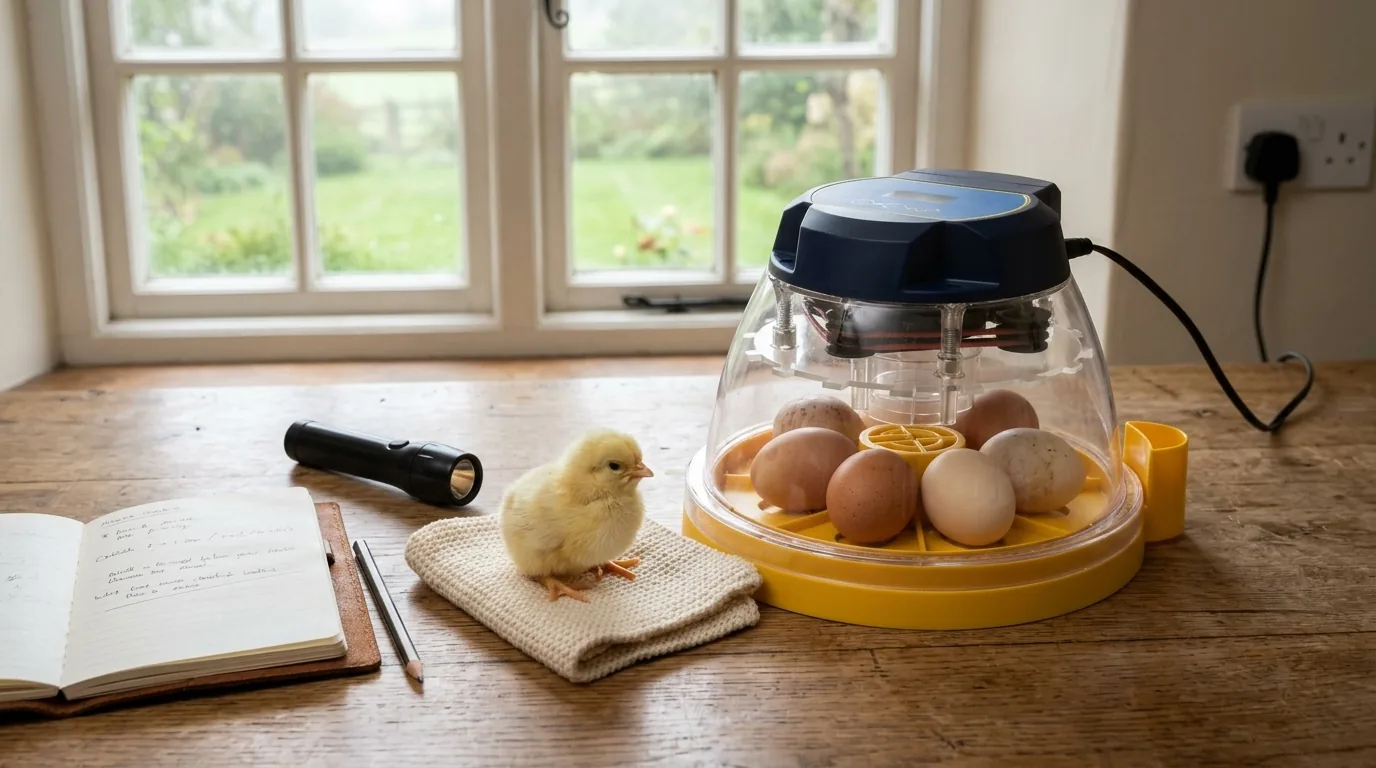
- Compact design: about 24.5 x 24.4 x 16.5cm
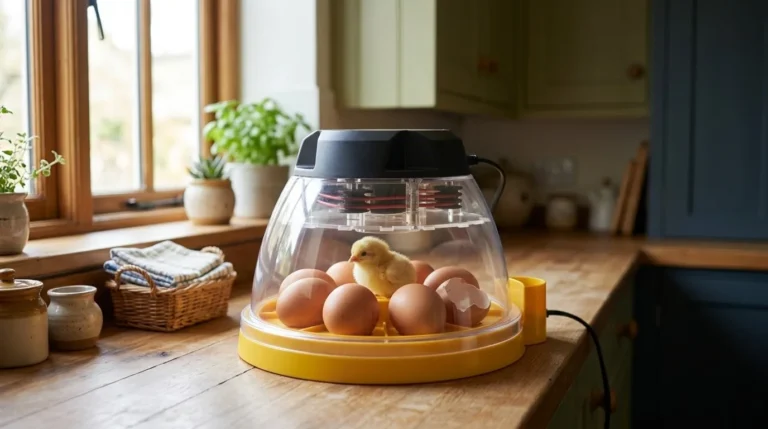
- Clear lid, so you can watch the hatch
- Made in Britain
Why automatic turning and temperature matter
Most failed hatches come down to two things: temperature that drifts too high or too low, and eggs that aren’t turned often enough in the first 18 days. A broody hen does both instinctively. In an incubator, you either do it yourself several times a day or let the machine handle it. The Mini II Advance controls temperature digitally and turns the eggs automatically, which removes the two biggest sources of error for beginners.
What we like
- It does the hard parts for you. Temperature and turning are automatic, which removes the two biggest causes of failed hatches.
- It’s small. It fits on a worktop or shelf, which makes it ideal for a first hatch.
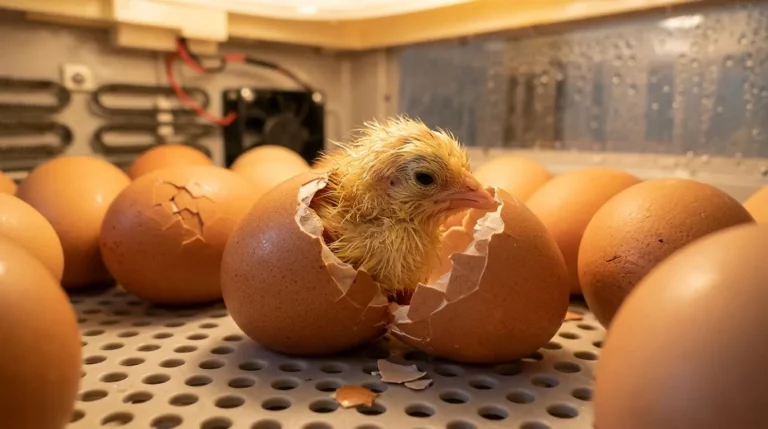
- It’s a great family project. The clear lid gives a perfect view of chicks pipping and hatching.
- Trusted brand. Brinsea has decades of experience and spare parts are widely available in the UK.
- Consistent results. Owners frequently mention reliable temperature compared with cheap imports.
What to bear in mind
- Only seven eggs. Not every egg will be fertile or hatch, so you may end up with just a few chicks.
- Humidity is manual. You’ll need to add water and keep an eye on it, especially for the last three days.
- The price. Budget incubators cost much less, but they tend to be less consistent.
- Room temperature matters. Like all small incubators, it works best in a room with a stable temperature, away from radiators and sunny windows.
How to get a good hatch with the Mini II Advance
- Run it empty first. Switch it on for a day before setting eggs to check it holds temperature in the room you’ve chosen.
- Use good eggs. Clean, uncracked fertile eggs, stored pointy end down at cool room temperature and set within about a week of laying.
- Days 1–18: let the incubator turn the eggs and keep humidity moderate, following Brinsea’s instructions.
- Candle around day 7 and day 14 to check development and remove any clear or failed eggs.
- Day 18 (“lockdown”): turning stops, raise humidity and don’t open the lid until the hatch is finished.
- Days 20–22: chicks pip and hatch. Leave them in the incubator until they’re dry and fluffy, then move them to a warm brooder.
Our step-by-step guide to hatching chicken eggs in an incubator covers each stage in more detail.
Mini II Advance vs Mini II EX
Brinsea also sells the Mini II EX, an upgraded version of the same compact incubator with extra controls. For most first-time and occasional hatchers, the Advance is all you need. If you plan to hatch regularly, want more precise control or want to experiment with different species, the EX is worth a look.
Before you hatch: think about the chicks
It’s easy to focus on the incubator and forget what comes next. You’ll need a brooder with a heat source, chick crumb and a suitable drinker ready before the eggs hatch. And on average around half of chicks will be cockerels, which can be hard to rehome — many councils and neighbours won’t welcome a crowing cockerel. Have a plan before you start. See do you need a cockerel? for more.
Who is it for?
The Mini II Advance is ideal for backyard keepers who want to hatch a small number of chicks, families and schools. If you want to hatch a dozen or more at a time, look at the Brinsea Maxi 24 Advance or see our guide to the best egg incubators.
Frequently asked questions
How many eggs does the Brinsea Mini II hold?
Up to seven hen or duck eggs, or more smaller eggs such as quail.
Do I need to add water?
Yes. Humidity is controlled by adding water to the reservoirs, especially during the last few days.
Can I use it for duck eggs?
Yes, it’s designed for hen and duck eggs. Duck eggs take around 28 days and have different humidity needs.
The verdict
If you want a reliable, easy-to-use incubator for small hatches, the Brinsea Mini II Advance is one of the safest choices you can make in the UK. It’s not the cheapest, but it takes much of the guesswork out of hatching.
We haven’t tested this incubator ourselves; this review is based on the manufacturer’s specifications and owner feedback, checked on Amazon UK in October 2026. As an Amazon Associate we earn from qualifying purchases.