The Deep Litter Method for Chickens: A Simple UK Guide
The deep litter method is a way of managing chicken bedding that many keepers swear by. Instead of mucking out the coop every week, you let the bedding build up and compost slowly in place. Done well, it means less work, a coop that stays a little warmer in winter, and a supply of excellent compost for the garden. Done badly, it means a damp, smelly coop. This guide explains how it works, how to do it properly in a British climate, and whether it suits your set-up.
How the deep litter method works
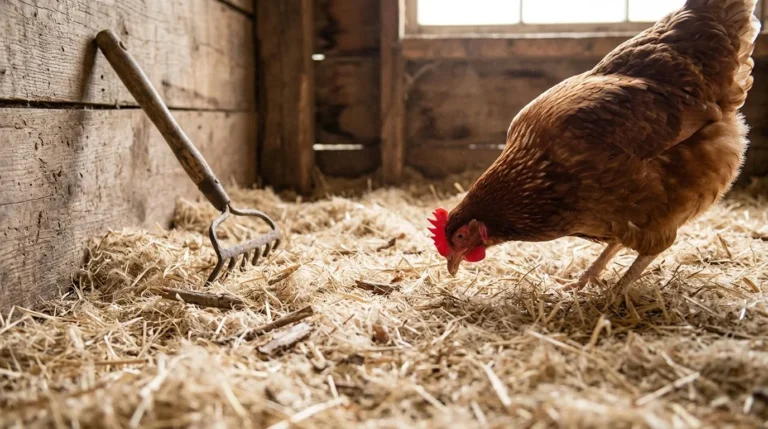
You start with a thick layer of carbon-rich bedding, then keep adding fresh material on top rather than removing it. Your hens do much of the work: they scratch and turn the litter, mixing droppings into it. Over time, microbes break the mixture down — rather like a slow compost heap — and the bottom layers gradually turn into a crumbly, earthy material.
The key is balance. Droppings add nitrogen and moisture; bedding such as wood shavings, hemp or chopped straw adds carbon and soaks up the wet. If there is enough dry carbon material and enough air, the litter breaks down without smelling. If it gets too wet or too compacted, it turns anaerobic and starts to smell of ammonia.
What you need
- A coop with a solid floor (or a walk-in shed with a solid or earth floor) and enough depth to hold 15–30cm of litter.
- Good ventilation above perch height, so moisture can escape.
- Absorbent bedding — wood shavings, hemp, chopped straw, or a mix. Many keepers add dry leaves in autumn.
- A garden fork or rake for turning the litter.
How to do it, step by step
- Start clean. Clear the coop completely, check for red mite and let it dry. Starting in spring or early autumn is easiest.
- Lay a thick base. Spread around 10–15cm of bedding over the floor.
- Turn it regularly. Once or twice a week, stir or rake the litter so droppings are mixed in and air reaches the lower layers. Scattering a little mixed corn on top encourages the hens to do this for you.
- Add fresh bedding on top. Whenever the surface looks dirty or damp, add a fresh layer rather than removing the old one.
- Remove wet patches. Take out any soggy areas straight away, especially around drinkers. Keeping drinkers outside the coop helps a lot.
- Let it build. Over several months the litter will deepen to 20–30cm.
- Clear out once or twice a year. Remove it all — usually in spring and/or autumn — and add it to the compost heap or let it finish rotting before using it on the garden.
How to tell if it’s working
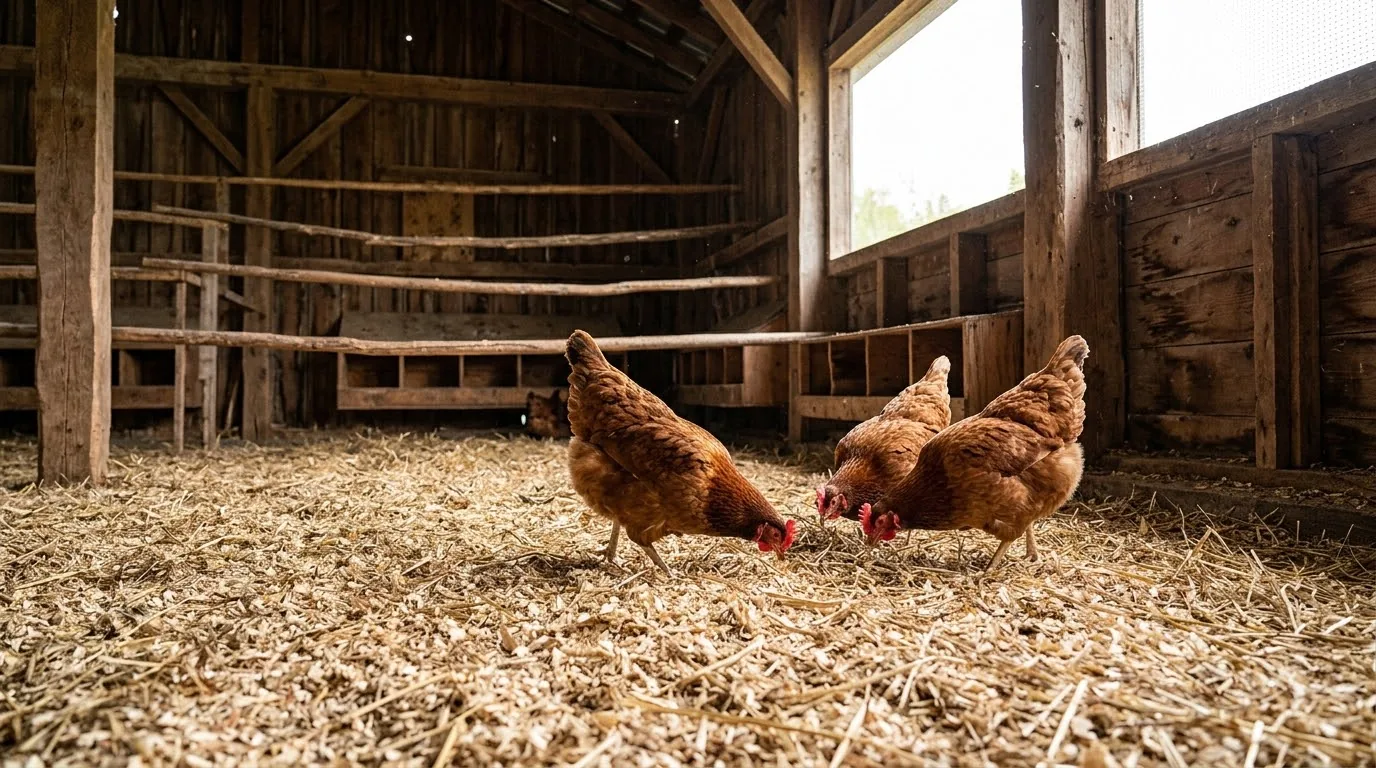
Healthy deep litter should look and smell like a forest floor: dry or slightly damp on top, crumbly underneath, with an earthy smell. If you notice a sharp ammonia smell, see clumps of wet, matted bedding, or flies gathering, the litter is too wet or too compacted. Remove the worst of it, add plenty of fresh dry bedding, turn it thoroughly and check your ventilation.
Pros and cons
| Pros | Cons |
|---|---|
| Less frequent full cleaning | Needs a dry, well-ventilated coop |
| Can add a little warmth in winter | Can smell of ammonia if it gets too wet |
| Great compost for the garden | Not ideal for small or plastic coops |
| Hens enjoy scratching through it | Can make red mite checks less obvious |
| Uses bedding efficiently | Requires regular turning |
Is it right for your coop?
Deep litter works best in larger walk-in coops or sheds with solid floors and good ventilation, where there’s room for a deep layer and space for you to turn it. In small coops with slide-out droppings trays — and in plastic coops, which are designed to be cleaned quickly and often — regular cleaning is usually simpler and more hygienic. See our coop cleaning guide for that approach.
It’s also worth keeping the method under review in a very wet winter. Damp UK weather can make it harder to keep litter dry, especially if hens come in with muddy feet from an uncovered run. Covering the run makes a big difference — see our run covers guide.
Deep litter in the run
Many keepers use a similar approach in the run: a deep layer of wood chip that’s topped up rather than replaced. It keeps the ground from turning to mud, gives hens something to scratch through and can be raked out and composted once or twice a year. Use proper play-grade or untreated wood chip rather than garden bark that might contain mould.
Red mite and deep litter
Red mite live in cracks around perches and nest boxes rather than in the litter itself, but a deep layer can make it easier to miss early signs. Keep checking perch ends and joints regularly, and treat the coop structure when you do your full clear-out. Our red mite guide explains what to look for.
Frequently asked questions
How often should I turn deep litter?
Once or twice a week is plenty for most backyard coops. Scatter some grain and your hens will help.
Can I use deep litter in a plastic coop?
It isn’t ideal. Plastic coops are designed for quick, frequent cleaning, and there’s rarely space for a deep layer.
Does deep litter keep hens warm?
Composting litter can produce a little warmth, but the main benefit is dry, insulating bedding. Hens cope well with cold as long as they’re dry and out of draughts.
What is the best bedding for deep litter?
Wood shavings and hemp are the most popular in the UK. Mixing in dry leaves or chopped straw adds variety and carbon.
Choosing what to use? See our guides to the best chicken bedding and best hemp bedding.