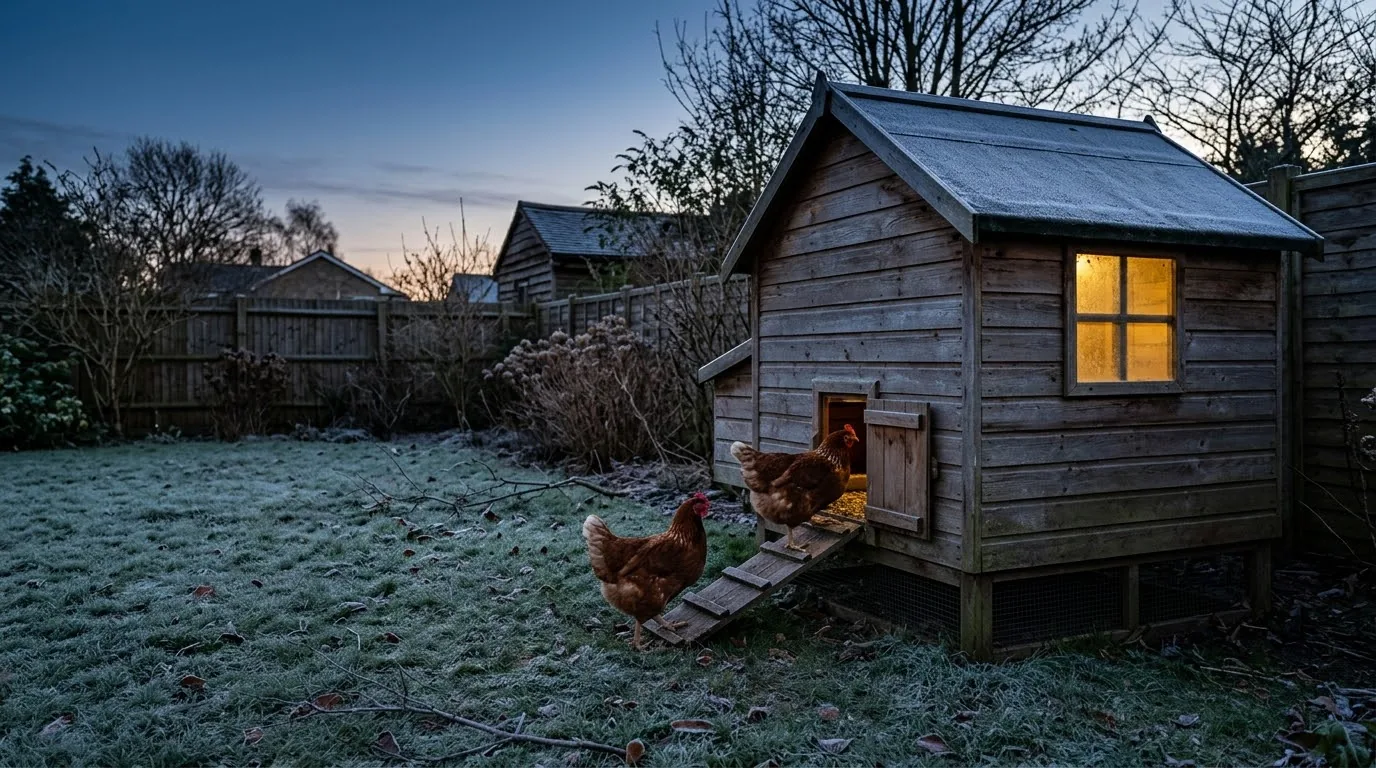
Do Chickens Need Light in Winter? Egg Laying in the Dark Months
As the clocks go back in late October, most keepers notice the same thing: the egg box that was full all summer starts to look a bit sorry for itself. Some hens slow down, others stop altogether, and it’s natural to wonder whether a light in the coop would get things going again. The short answer is that your hens don’t need extra light to stay healthy — but it helps to understand why they slow down before you decide whether to intervene.
Why hens lay less in winter
Egg laying is driven by daylight. Light entering a hen’s eye (and, to a lesser extent, passing through her skull) stimulates the pituitary gland, which triggers the hormones that tell her body to produce eggs. Most hens need somewhere around 14 hours of light a day to lay at their best, and production starts to fall away once day length drops below about 12 hours.
In the UK that threshold is crossed in late September. By the winter solstice in December, London gets only around eight hours of daylight, and the north of England and Scotland get noticeably less. For a hen, that is a very clear signal that it’s not the season for raising chicks, so her body sensibly puts egg production on hold.
Daylight isn’t the only factor. Most hens moult in autumn, dropping old feathers and growing a fresh coat for winter. Feathers are almost pure protein, and a hen can’t easily grow a new set and lay eggs at the same time. Cold weather, wet ground and a drop in foraging all add to the effect. Put together, a winter pause is completely normal.
Do chickens need light in winter?
No — hens do not need artificial light to stay healthy. Extra light is only ever used to encourage laying, not for the hens’ welfare. Wild junglefowl, the ancestors of our garden hens, lay a small clutch in spring and rest for much of the year, and many experienced keepers feel the winter break does their birds good.
A hen is born with all the egg-yolk cells she will ever have. Resting through winter doesn’t give her more eggs over her lifetime, but many keepers believe it spreads laying over more years and gives her reproductive system a rest. Commercial farms light their sheds to keep hens laying almost continuously, and those birds are typically replaced at around 72 weeks old — not a model most back-garden keepers want to copy.
Should you add light? The pros and cons
Reasons some keepers do
- You rely on your hens for eggs year-round and don’t want to buy eggs from November to February.
- You keep young, hybrid layers that are bred for high production and may otherwise go off lay for several months.
- Your coop is already wired for a light for checking on the flock on dark evenings.
Reasons many keepers don’t
- It pushes hens to keep laying when their bodies would naturally rest, which may shorten their productive life.
- Any electrics in a dusty, damp coop need to be installed carefully to avoid a fire risk.
- A sudden change in light can trigger a moult or confuse roosting behaviour.
- Rescued ex-battery hens in particular often benefit from a proper rest.
How to add light safely (if you decide to)
If you do want to supplement daylight, the aim is to top up the day to around 14 hours in total — no more. A few principles make a big difference:
- Add light in the morning, not the evening. Set a timer so the light comes on before dawn and switches off once natural daylight arrives. If the light goes off suddenly at night, hens can be left in darkness away from the perch and won’t settle properly.
- Use a low-wattage LED. A small warm-white LED is enough; hens don’t need bright floodlighting. LEDs also run cool, which reduces the fire risk compared with old-fashioned bulbs.
- Keep it safe. Use fittings designed for outdoor or damp locations, keep cables out of pecking reach and well away from bedding, and if you’re running mains power to the coop, have it done by a qualified electrician with an RCD. Battery or small solar-powered lights are a simpler option for many gardens.
- Increase light gradually. Add 15–30 minutes a week rather than jumping straight to 14 hours, so the change doesn’t shock the flock into a moult.
- Never use a heat lamp as a light. Heat lamps are a well-known cause of coop fires and are unnecessary for adult hens — see our guide to whether chickens need heat in winter.
Other ways to support laying through winter
Whether or not you add light, good winter care helps hens stay in condition and come back into lay strongly in spring.
- Feed a complete layers ration. Pellets or mash should make up most of the diet. Keep treats to a minimum in winter, as they dilute the protein and calcium hens need — and remember it’s illegal in the UK to feed kitchen scraps to poultry. Our best chicken feed guide covers the main UK options.
- Offer grit and oyster shell. Hens need insoluble grit to grind food and a calcium source for strong shells — see grit and oyster shell.
- A handful of mixed corn in the afternoon. Corn takes a while to digest and gives hens a little extra energy before a long, cold night. Keep it as a treat rather than a main meal.
- Keep water unfrozen. A hen without water stops laying quickly. Check drinkers morning and evening, and see our best chicken drinkers for designs that cope better with frost.
- Keep the coop dry and draught-free, but ventilated. Damp air causes more problems than cold. Vents above perch height let moisture escape without blowing on roosting birds.
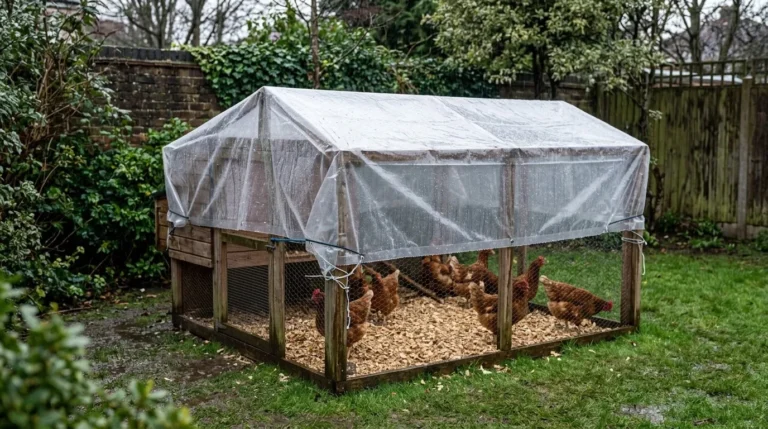
- Cover the run. A roof or run cover keeps the ground drier, gives hens somewhere to scratch on wet days and reduces contact with wild birds during bird flu housing measures.
- Use absorbent bedding. Hemp bedding or the deep litter method help keep the coop dry through the wetter months.
For a fuller checklist, see our guide to winter care for backyard chickens.
When will my hens start laying again?
Most hens come back into lay as the days lengthen. In the UK you’ll often see the first eggs return from late January or February, with production building through March and April. Young hybrids that hatched in spring may lay through their first winter; older pure breeds may not start again until spring is well under way.
If a hen hasn’t started again by late spring, it’s worth looking at other causes — age, stress, a hidden broody spell, parasites or diet. Our guide to why chickens stop laying walks through the most common reasons.
Frequently asked questions
Is it cruel to light a chicken coop in winter?
Not if it’s done carefully — modest supplementary light in the morning, topping up to about 14 hours, is widely used. The welfare concerns come from lighting hens for very long days, using unsafe fittings, or switching lights off abruptly at night.
How many hours of light do chickens need to lay?
Around 14 hours of light a day is the figure most often used for good laying. Production usually drops noticeably below 12 hours.
Will extra light stop my hens moulting?
No. Light can affect the timing of the moult, but every hen needs to replace her feathers. Forcing laying through a moult isn’t recommended.
Should I light the coop for older hens?
Most keepers don’t. Hens over two or three years old lay fewer eggs anyway and generally benefit from a natural rest.
The bottom line
A drop in eggs over winter is normal and healthy. If you’re happy to let your hens rest, focus on good feed, unfrozen water and a dry coop, and they’ll reward you in spring. If you do add light, keep it modest, add it in the morning on a timer and make sure every fitting is safe for a damp, dusty building.