Best Poultry Disinfectants UK (2026): Keep Your Coop Clean and Safe
This guide contains affiliate links. If you buy through them we may earn a small commission, at no extra cost to you. Find out more.
Keeping the coop clean is the foundation of a healthy flock. Regular cleaning cuts the risk of disease, keeps red mite and smells under control, and is a key part of biosecurity during bird flu season. But not every product does the same job: some are designed for weekly cleaning, some for killing a wide range of pathogens, and some specifically for red mite. This guide picks the best poultry disinfectants available in the UK and explains when to use each one.
Our top picks at a glance
| Product | Best for | Price (approx.) |
|---|---|---|
| Cooper and Gracie Poultry House Disinfectant | Best for routine coop cleaning | £12 |
| Virkon S Disinfectant Tablets | Best for biosecurity and footdips | £30 |
| Nettex Total Mite Kill | Best for red mite | £33 |
The best poultry disinfectants
1. Cooper and Gracie Poultry House Disinfectant — best for routine cleaning
A ready-to-use spray made specifically for coop surfaces, from a family-run British brand. It’s the sort of product you’ll reach for every week or two when you clean out the coop.
- For the housing, not the birds
- Plant-based and insecticide-free (no permethrin)
- Spray directly onto perches, nest boxes and surfaces after removing birds, feed and water
- Made in the UK
What we like: Simple to use for weekly cleaning, pleasant to work with and well reviewed.
Worth knowing: It’s a cleaning product rather than a full red mite treatment.
2. Virkon S — best for biosecurity
Virkon S is a broad-spectrum disinfectant widely used on farms and approved by DEFRA for use against a range of animal diseases. These tablets dissolve in water, making them easy to measure out for a footdip or spray.
- DEFRA-approved broad-spectrum disinfectant
- Tablet form — dissolve in water
- Suitable for footdips, equipment and housing
What we like: It’s the kind of disinfectant often recommended for biosecurity during bird flu outbreaks, and a small tub goes a long way for a backyard flock.
Worth knowing: Follow the dilution rates on the label carefully, wear gloves, and keep it away from your hens while using it.
3. Nettex Total Mite Kill — best for red mite
If your cleaning is about tackling red mite, use a product made for the job. Red mite hide in cracks and crevices by day and feed on hens at night, so treating the coop structure thoroughly is essential.
- Ready-to-use spray refill (2L)
- For treating housing
What we like: Convenient and well rated for regular mite treatments.
Worth knowing: Read the label for how to apply it and when hens can return. Repeat treatments are usually needed to catch newly hatched mites.
Cleaning vs disinfecting: what’s the difference?
Disinfectants work best on clean surfaces. Droppings, dust and old bedding protect bacteria and viruses from the disinfectant, so always remove muck first and scrub surfaces before you disinfect. Think of it as two stages: clean to remove dirt, then disinfect to kill what’s left.
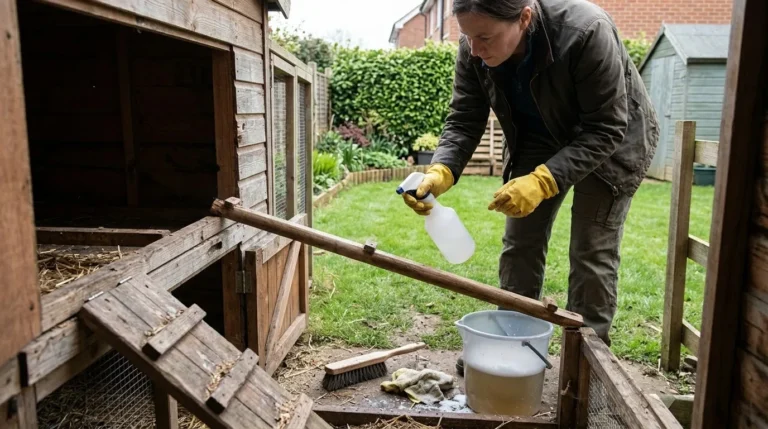
How to deep-clean a chicken coop
- Choose a dry day and move hens into the run or garden.
- Remove feed, water and all bedding.
- Scrape off droppings and take out removable perches, nest box liners and trays.
- Scrub with hot soapy water, paying attention to corners and perch ends, then rinse.
- Apply your disinfectant following the label instructions and contact time.
- Treat for red mite if needed, especially around perches and joints.
- Let everything dry completely before adding fresh bedding.
For a full routine — daily, weekly and deep-clean checklists — see our guide to how to clean a chicken coop.
Biosecurity and bird flu
Avian influenza is a recurring risk in the UK, particularly in autumn and winter when wild birds migrate. Good biosecurity helps protect your flock:
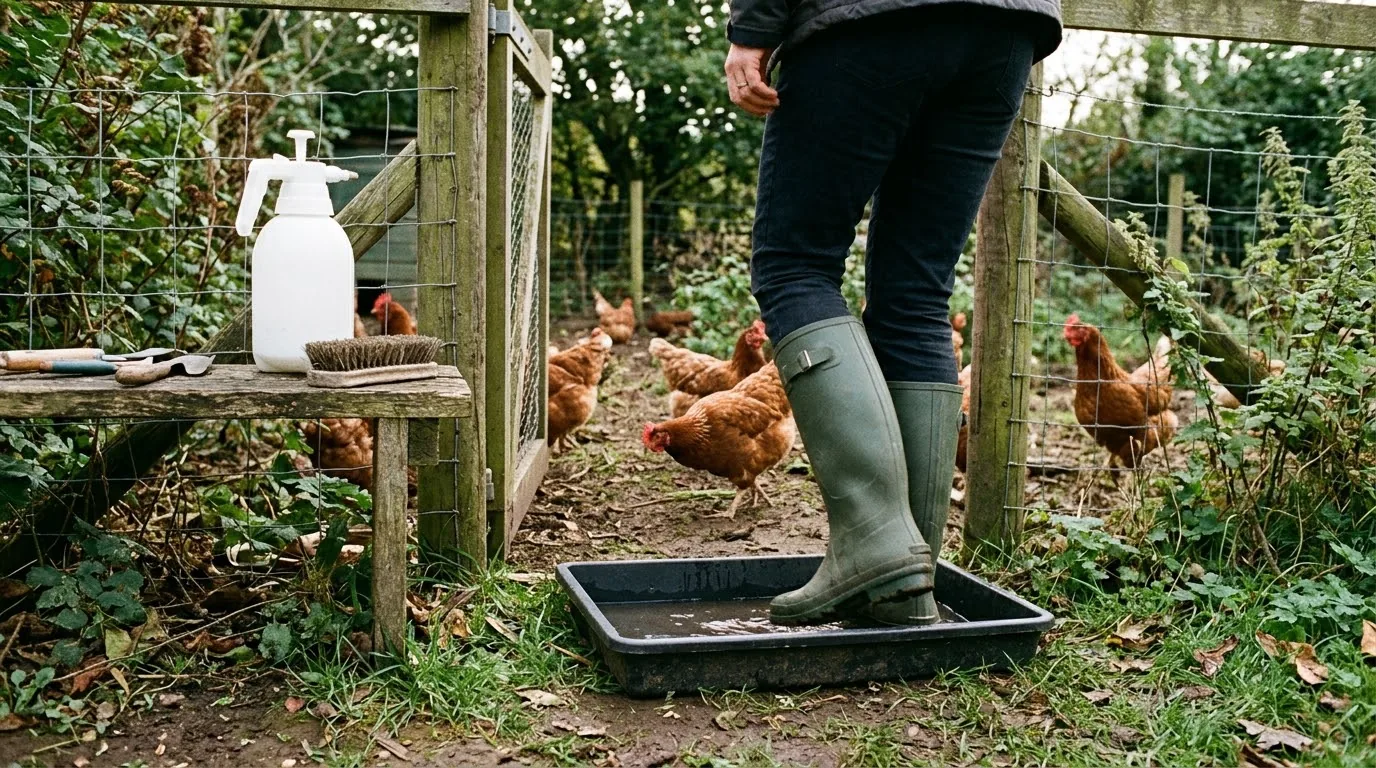
- Keep a footdip with an approved disinfectant at the entrance to your run and use it every time.
- Have a dedicated pair of boots for the run.
- Keep feed and water under cover where wild birds can’t reach them.
- Clean and disinfect equipment that comes from other keepers.
- Follow any housing orders and current government guidance.
Products used for disease control should be on the DEFRA approved list for the relevant purpose — check the label and the government’s approved disinfectants list.
Safety tips
- Never mix disinfectants or use household bleach alongside other products.
- Wear gloves and follow label instructions for dilution and contact time.
- Keep hens out until surfaces are dry.
- Store products away from feed and out of reach of children and pets.
Frequently asked questions
How often should I disinfect a chicken coop?
Remove droppings regularly, clean the coop every week or two depending on size and bedding, and do a full deep clean and disinfection every few months — more often during disease outbreaks.
Can I use household bleach?
It isn’t ideal. Bleach is less effective in the presence of organic matter, produces fumes and can damage surfaces. Poultry-specific or DEFRA-approved disinfectants are a better choice.
Is disinfectant safe for chickens?
Products designed for poultry housing are safe when used as directed. Keep hens away during application and let surfaces dry before they return.
Dealing with mites? Follow our red mite guide.
Prices, ratings and specifications were checked on Amazon UK in October 2026 and may have changed since. As an Amazon Associate we earn from qualifying purchases.