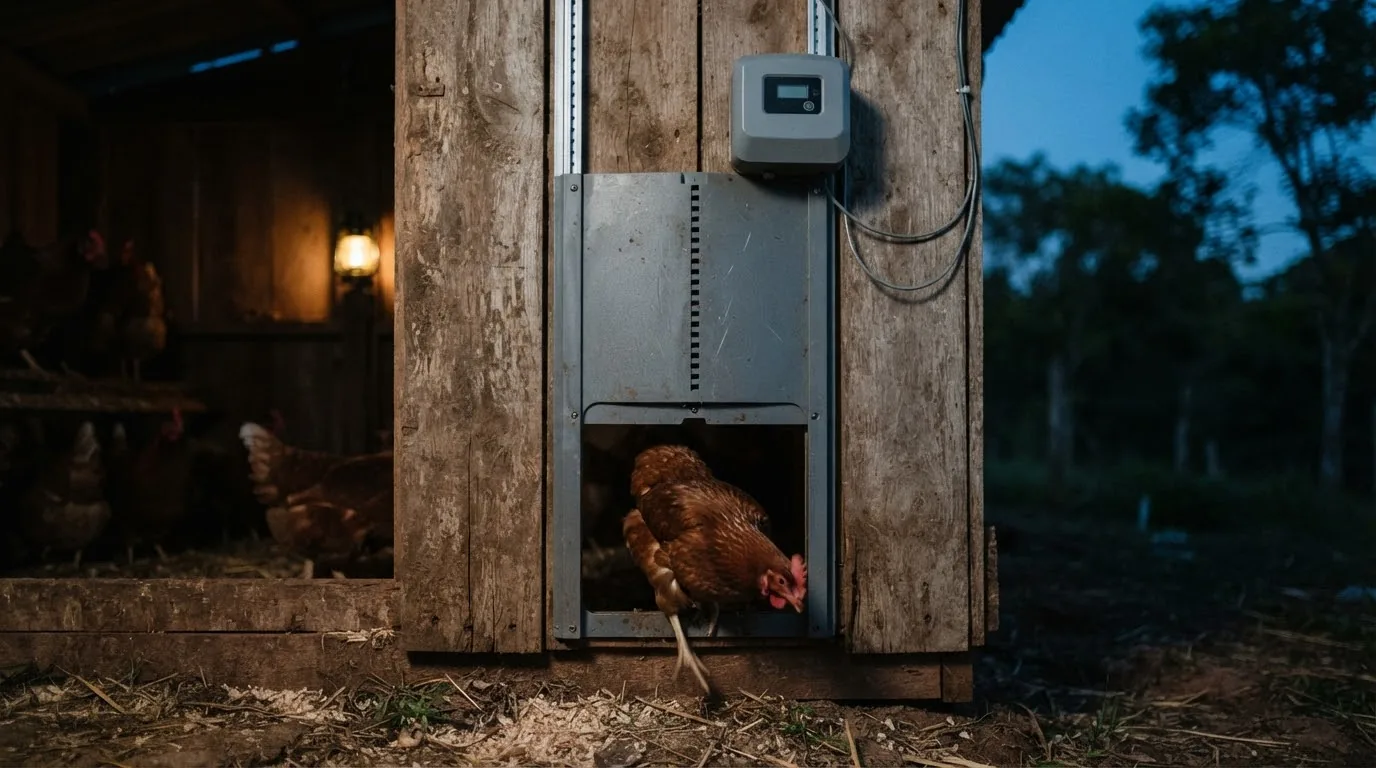
ChickenGuard Review: Is the UK’s Favourite Automatic Coop Door Worth It?
This guide contains affiliate links. If you buy through them we may earn a small commission, at no extra cost to you. Find out more.
ChickenGuard is one of the best-known automatic coop door brands in the UK, and for many keepers it’s the first name that comes up when they ask how to stop worrying about letting the hens out at dawn and shutting them in at dusk. Its AIO Complete kit bundles the door and opener together, so you don’t have to work out which motor fits which door. In this review we look at what it does, how it compares with cheaper doors, and who it’s really worth the money for.
Why an automatic door matters in the UK
Foxes are the biggest threat to back-garden hens in Britain, and they don’t only visit at night — urban foxes in particular are often active at dawn and dusk, exactly when a keeper is most likely to be late opening up or closing the pop-hole. An automatic door means the hens are shut in safely every evening, even if you’re stuck in traffic or away for the weekend, and let out in the morning without anyone having to get up early. It’s one of the upgrades keepers most often say they wish they’d bought sooner. Our fox-proofing guide explains how a door fits into wider coop security.
Key features (ChickenGuard AIO Complete)
- Door and opener supplied together, with four AA batteries
- Auto-Stop: reopens and tries again if something blocks the door
- Anti-lift, powder-coated aluminium door
- Winter Mode gives the motor extra power on frosty mornings
- Can switch to solar or mains power later
- Guided LCD set-up with automatic calibration
- Can be set to open and close by timer or by light level
How it works
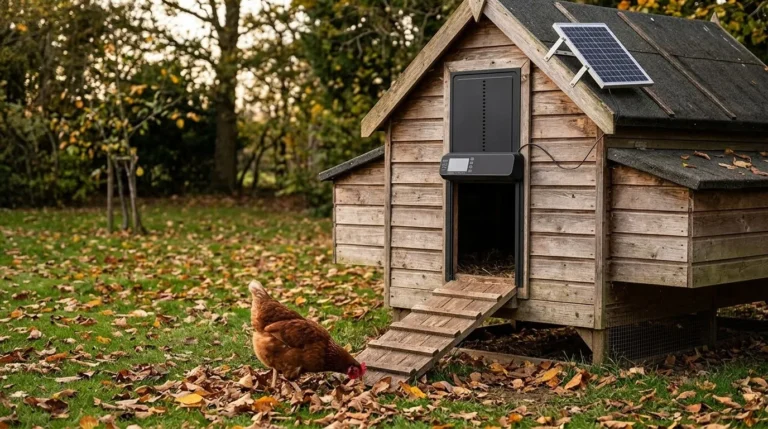
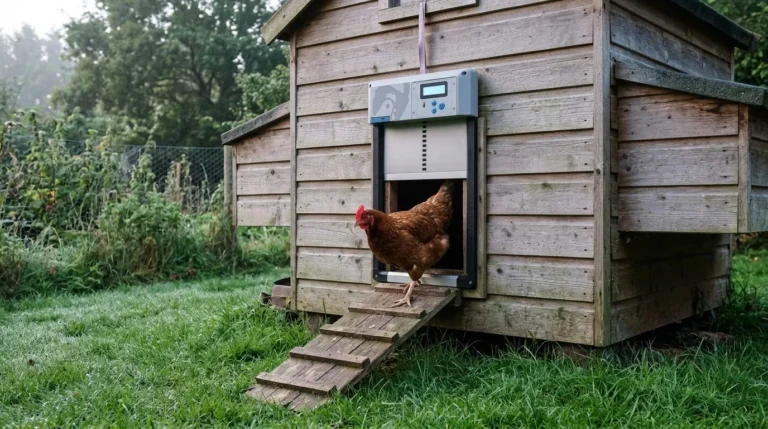
The opener sits above the pop-hole and raises and lowers the door using a cord. You choose whether it runs on a timer (for example, open at 7am and close at 8pm) or on a light sensor that reacts to dawn and dusk. Most keepers find a combination works best through the year: light-sensing in summer, then a set closing time in winter so the door doesn’t shut too early on a dark, overcast afternoon.
The Auto-Stop feature is important. If a hen is standing in the doorway or bedding has drifted under the door, the door won’t keep pushing down — it reverses and tries again. That protects both your hens and the motor.
Installation tips
- Fit it on the inside of the coop where possible. This keeps the unit drier and out of reach of foxes and badgers.
- Make sure the door runs freely. Most problems with automatic doors come from runners that aren’t vertical or bedding that builds up at the bottom.
- Set the closing time after the last hen is in. Watch your flock for a few evenings and set the door to close 20–30 minutes after they’ve gone to roost.
- Check on the first few nights. Occasionally a hen is slow to go in. Once they learn the routine, it becomes very reliable.
- Keep spare batteries. Cold weather shortens battery life, so check them before winter.
What we like
- Designed for British problems — foxes and frosty mornings.
- No guesswork about whether the door and motor are compatible.
- Flexible power options: batteries now, solar or mains later.
- The Auto-Stop safety feature gives real peace of mind.
- Easy to find support, spares and accessories in the UK.
What to bear in mind
- It costs considerably more than budget doors.
- Its Amazon UK rating (around 4.0 at the time of writing) is good but not the highest in the category.
- A cord-lift design needs enough clear space above the pop-hole to mount the opener.
- Like all battery doors, it needs occasional battery changes — especially in winter.
Want even more security?
The ChickenGuard PRO with Self-Locking Door adds a door that locks itself shut when closed, which is ideal if foxes regularly visit your garden or you’ve had a fox try to lift the door before.
ChickenGuard vs cheaper automatic doors
There are plenty of budget automatic doors on Amazon, many costing well under half the price. Some are perfectly good, and we cover the best in our automatic coop doors guide. The main things you pay for with ChickenGuard are build quality, the anti-lift door, Auto-Stop, the winter mode and established UK support. If your coop is in a garden with frequent fox visits, that extra security is usually worth paying for. If you mainly want convenience and foxes are rare, a well-reviewed budget door may be enough.
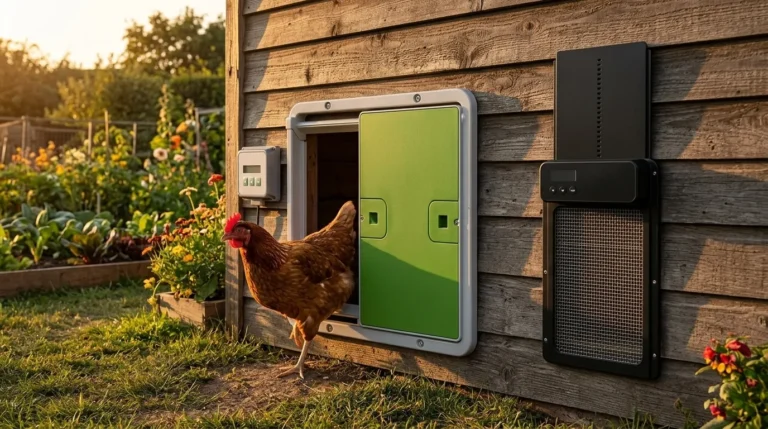
If you’re choosing between the two big UK brands, read our head-to-head: Omlet automatic door vs ChickenGuard.
Who is ChickenGuard best for?
- Keepers with wooden coops who want a complete, matched door-and-motor kit.
- Gardens where foxes are a known problem.
- Anyone who works long hours, commutes, or goes away for weekends.
- Keepers who want the option of solar or mains power later.
If you own an Omlet Eglu, Omlet’s own door is usually the simpler fit.
Frequently asked questions
Will an automatic door keep foxes out?
It removes the biggest risk — a pop-hole left open at dusk — but the rest of the coop and run must also be secure. Check for gaps, weak mesh and doors that can be lifted.
Do hens learn to use an automatic door?
Yes. Hens naturally go in to roost at dusk, so the door simply closes behind them. Most flocks adapt within a few days.
How long do the batteries last?
It depends on use and temperature. Cold weather drains batteries faster, so check them regularly from autumn and consider solar or mains power if you prefer not to.
Can I fit it to any coop?
It suits most wooden coops with a vertical pop-hole and enough space above it for the opener. Measure your pop-hole and check the space before buying.
The verdict
ChickenGuard is a safe, well-supported choice for UK keepers who want a dependable door and are willing to pay for it. Its anti-lift door, Auto-Stop and winter mode are designed around the problems British keepers actually face. Compare it with other options in our best automatic coop doors guide.
We haven’t tested this door ourselves; this review is based on the manufacturer’s specifications and owner feedback, checked on Amazon UK in October 2026. As an Amazon Associate we earn from qualifying purchases.