Wooden vs Plastic Chicken Coops: Which Is Better?
This guide contains affiliate links. If you buy through them we may earn a small commission, at no extra cost to you. Find out more.
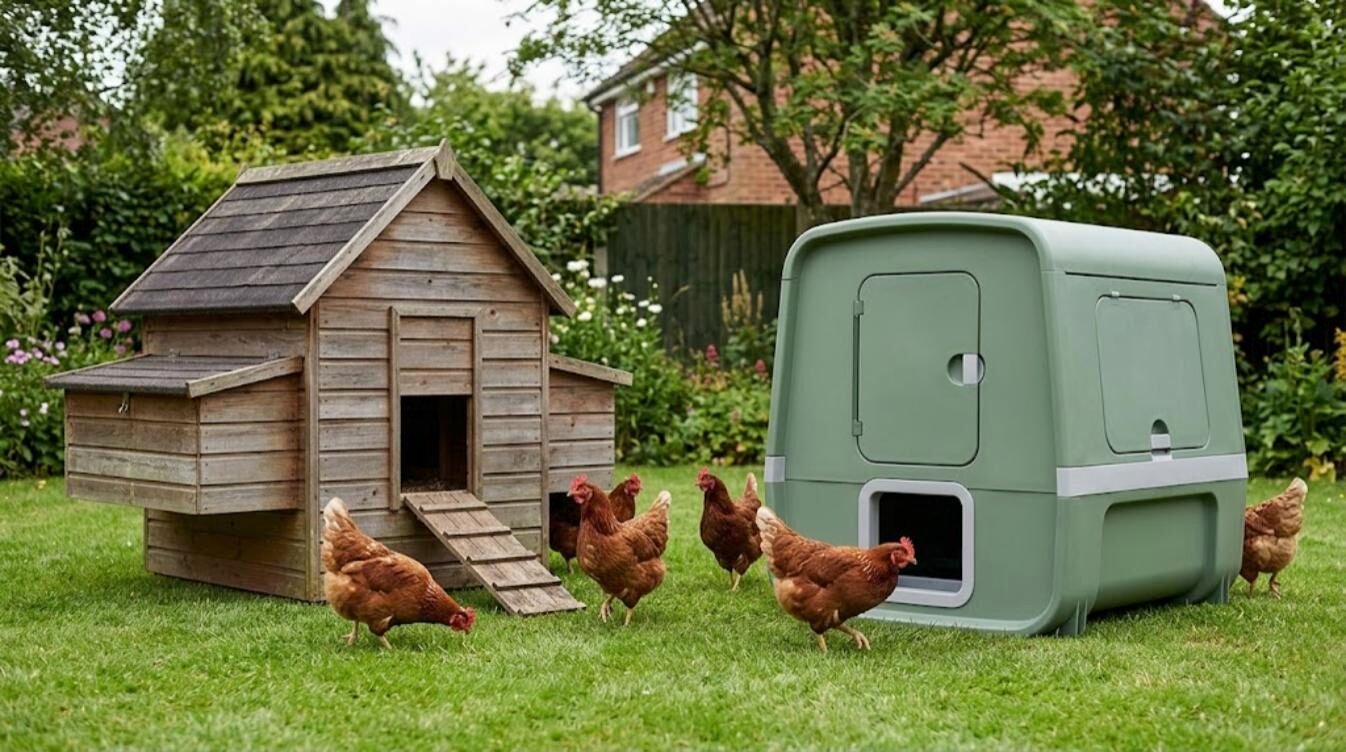
It’s the first big question most new keepers face: wooden or plastic coop? Both can make a perfectly good home for your hens, but they suit different budgets and different people.
Wood vs plastic at a glance
| Wooden coops | Plastic coops | |
|---|---|---|
| Price | Cheaper up front | More expensive |
| Cleaning | Slower; needs scrubbing | Fast; can be hosed down |
| Red mite | More cracks for mites to hide | Far fewer hiding places |
| Maintenance | Needs treating every year or so | Very little |
| Weather | Can rot or warp if not maintained | Won’t rot |
| Look | Traditional | Modern |
| Lifespan | Varies widely with quality | Long |
The case for wooden coops
- Much lower cost — you can start for well under £200.
- Huge choice of sizes and styles.
- Easy to modify, repair or extend.
- Many people prefer the look in a garden.
Our favourite is the FeelGoodUK Large Coop House, which avoids roofing felt to reduce red mite hiding places.
The case for plastic coops
- Cleaning takes minutes rather than an hour.
- Red mite is much easier to control.
- No rotting, painting or treating.
- Insulated models stay cooler in summer and warmer in winter.
The best-known option is the Omlet Eglu Cube. See all our picks in the best plastic chicken coops guide.
Our verdict
If budget is your main concern, choose a well-made wooden coop and keep on top of maintenance. If you can afford it and want the easiest possible life — especially when it comes to red mite — plastic is worth the extra money.
Prices, ratings and specifications were checked on Amazon UK in October 2026 and may have changed since. As an Amazon Associate we earn from qualifying purchases.


